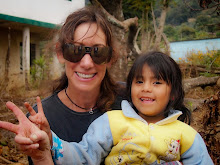
Three weeks at home and the memories are quickly fading. I've made a video of the trip, amassing all the most descriptive photos from all 7 countries visited and putting them in one place, to music. (see "View the Video," above, and click on the movie once to open it, then again to start it). I have already begun to plan a trip back - West Africa and southern AFrica in the winter of 2011. Both of these tasks help to keep my mind from leaving Africa. But writing my afterthoughts here, will help too.
Everyone keeps asking, "What was your favorite part?," "What stands out the most?"
The deep, bright color of the terra cotta soil. It seemed to be everywhere - not just in the dirt roads and the fields, but in the mud walls of the houses, the bark of the tree trunks, reflected in the sky. I even saw a reddish tint in the locals' skin color. I did. I swear I did. The color formed a rich background for the different shades of black skin, the colors of the leaves, the animals, the plains and even the clothing.
Nor can I ever forget the night we camped in a field, somewhere in Uganda, or was it Kenya? Road damage from the rains had seriously delayed our arrival at a particular location. We were never going to make it before nightfall. The safest thing to do was to camp in an open field. It was so dark by the time we stopped that we didn't really know what kind of field it was, or what was nearby, if anything. (I woke up next to a 4 foot-high termite mound). The Village Chief was consulted first, of course, and with his permission and protection we pitched our tents and had a very quick, tasteless dinner. But at 5 am I was awakened by the most mesmerizing of sounds. Somewhere in the distance I heard a woman chanting, calling, singing, beseeching, pleading. And a group responded in kind. This responsive solo/chorus musical dance continued for about 1 hour. It was haunting. Was someone in trouble? Were they praying to the gods? Or was I completely mistaken? Could it be an animal that was causing some kind of ruckus? No, no, it was definitely a woman. Her voice was loud and insistent and strained to reach as far as possible. How could this woman not be tired? She was relentless. And the chorus grew as the day got lighter.
The men who had been guarding us all night, told us at breakfast that the song was the Village being called to awaken. The woman was their alarm clock. And the responsive singing got louder as more villagers awoke to start their day. Although I have heard and always loved the sound of the Imams calling Muslims to prayer from Minarets in the early morning hours, nothing matched the raw simplicity of this.
And, of course, there were the people. Everywhere we went, in every country, without exception, the people greeted us with 2-handed waves, like the Queen's wave, but with both hands (and much more enthusiasm). They are industrious people. Africans live, not just survive, despite the lack of running water, nearby health care, electricity, sidewalks, or roads. They lack wheel barrels, schools that teach, police that protect, even umbrellas, and sometimes, enough sunny days to dry their clothes.
For me the hardest thing was staying clean. Although most nights I had access to showers (perhaps with only cold water), the dust flies everywhere and both my body and clothes were always dirty at the end of the day. How hard it must be for the Africans who don't have the luxury of even a cold shower nearby.
And everyone walked. They walked with babies on their backs and on their fronts, they walked with bananas and buckets of water on their heads, they walked with bicycles carrying loads of firewood and families of 5. And, of course, it always seemed that they were walking uphill. They were coming and going to market, to funerals, to school and to their fields. In America the only people who walk are the exercisers - walking in a hurry to raise their heartbeat. Africans walk slowly to conserve their energy and in a rhythm that is synced to the rain, or the strength of the sun, or to eachother.
When I first got home and walked through the door, I was, at that very first instant, stunned by the excess - do I really need 15 pocketbooks and so many pairs of shoes? Does the grocery store have to be the size of a football field and have 500 different kinds of cereal? Why so many restaurants, roads, and types of deodorant? It was all so unnecessary and disproportionate to needs. It was just plain . . . . excessive.
I have many more thoughts and rememberances - but those I will keep to myself - for now.
Tuesday, April 27, 2010


Subscribe to:
Posts (Atom)