We reached Rwanda some time ago - the days are merging and dates don't exist. Our first full day here i took a private car and the two aussie girls from the pygmy day, (see below) and went to Kigala, the capital, about a 2-hour drive from we we are staying on the Congolese border. We went to the Genocide Museum, which was built not just as a memorial to the Rwandan genocide, but to genocide in general. Of course, a large part of the museum was dedicated to the horrible events that happened here in 1994 - 1 million people in 100 days were hacked to death, or raped (if they were lucky). Others were thrown by the hundreds, one on top of another, into latrines until they suffocated to death - often a long a painful process, and worse. Death by bullet was reserved only for those who could pay for the bullet. The museum, was of course, a tear jerker, as the events in Rwanda seem only to have happened just a little while ago. I was glued to the news at the time and could not believe the apathy of the world and the UN., whose soldiers here, were instructed to only shoot at the dogs eating the bodies that littered the streets by the thousands. Mass murderers and torturers were to be left alone.
Next stop was the Hotel Rwanda (the real name of which is Hotel des Milles Collines - Hotel of a Thousand Hills, which is what Rwanda means in English). Hotel Rwanda was just the name of the movie. We had lunch overlooking the pool that played so prominently in the movie and walked the grounds where thousands of Tutsis sought shelter, and survived, thanks to the Hutu hotel manager who kept them alive through bribes to the perpetrators of the genocide and an unknown hand from above.
Today was magnificent. We trekked 3 hours, straight up steep and muddy slopes to view the gorillas made famous by Dian Fossey and the movie Gorillas in the Mist. Only 450 remain in the world and only a very limited number of tourists can observe the 5 or 6 families that have been habituated to humans, and then only for one hour, once the nest is reached. We were within 3 feet of babies with their mothers and the great silverback - an enormous beast, who protects his brood. An amazing experience, but I was very, very winded. The trail up was aslosh in thick, deep mud and we climbed over 2,000 feet in about 1 1/2 hours. Once we neared the gorillas' nest, we laid down all of our backpacks and water bottles, and everything we had schlepped up (except cameras) and climbed through thistle and bamboo and who knows what else, over terrain that had never been walked upon by humans before (at least it looked that way). Former poachers are now trackers and guides - the income gives them the incentive not to poach. A guard with gun was always close by - just in case. But, apparently, there has never been an incident where the gorillas harmed a tourist. They were gentle and playful and very mindful of our presence.
I came back to our hotel covered in mud from the bottom of my hiking boots to mid-thigh.
Loving every minute. Its beautiful here
Tuesday, March 2, 2010


KITCHEN DUTY
Peeling potatoes for 23 people in the dark and almost-rain, after a long drive on dirt roads, even if they are a brilliant rust color, filled with potholes and roaming cows, is not fun. But Queen Elizabeth National Park is beautiful and, before the Ugandan and Rwandan poachers almost decimated the wildlife, was the second best game farm in Africa. Protected for a decade now, the animals are returning. (see photos)
We took a boat ride on the Kachinga Channel, a natural sliver of water connecting to the two great western lakes of Uganda (Albert and George) that are shared with the Congo. Hippos, rhinos, and crocs were everywhere (see photos).
Tonight I upgraded (again). Good thing. I have finally realized after 7 wet nights here, that rain at night, generally after midnight, is as common as the rising sun. The water however, gave out before I could shower (or use the bathroom). I gave the “owner” a lesson in capitalism and the need to satisfy the customer and all that jazz and he finally agreed to give me the room for half price – I paid $10 (with towel). I haven’t showered now for 3 days, which may not seem like a lot, but the roads are dusty, the bus, by now, filthy, and my clothes are dirty. Thank God for hair scrunchies.
We took a boat ride on the Kachinga Channel, a natural sliver of water connecting to the two great western lakes of Uganda (Albert and George) that are shared with the Congo. Hippos, rhinos, and crocs were everywhere (see photos).
Tonight I upgraded (again). Good thing. I have finally realized after 7 wet nights here, that rain at night, generally after midnight, is as common as the rising sun. The water however, gave out before I could shower (or use the bathroom). I gave the “owner” a lesson in capitalism and the need to satisfy the customer and all that jazz and he finally agreed to give me the room for half price – I paid $10 (with towel). I haven’t showered now for 3 days, which may not seem like a lot, but the roads are dusty, the bus, by now, filthy, and my clothes are dirty. Thank God for hair scrunchies.
PYGMIES
We had another long day of driving before reaching our campground in far western Uganda. I upgraded to a beautiful but sparse room, in a lodge with a view of the Rwenzori mountains, the fog and acacias, hills and lakes in the near distance. I was dry and warm and ready for the day. And what a day it was to be – the best so far.
While the rest of the group went to observe the 500 chimpanzees in the protected preserve, I chose to hire a taxi (with two young Australian girls) and visit the Batwa people (pygmies) on the Congolese border. The Batwa lived for centuries as naked bush people, hunting and gathering in the rain forests of Uganda, Rwanda and the Congo (formerly Zaire). Their lands were deforested by government or turned into nature reserves for the benefit of the wildlife and the tourists who love them. The pygmies were then placed by the government on restricted land (much like the Native Americans), and are discriminated against by the Ugandans. Considered dirty and primitive, they are shunned and deprived, having no land to farm and no consistent source of income.
After a two-hour ride through gorgeous mountains on winding dirt roads, we landed at the Office of the King of the Batwa, where we had to register and pay $10 each to visit. The last registered tourist signed in last June and just happened to be from Israel.
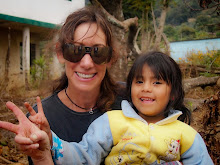
We were escorted to the Batwa “village”. I write “village” in parenthesis because it wasn’t really a village, at all. Their few huts were made of grass and bamboo, with no doorways or windows, and the land was parched and hard-packed mud. All The pigmies (the adults are about 4’ tall, give or take a few inches) were desperate to sell us their trinkets. We insisted on first learning about them. Through our translator we understood that 96 Batwa live in the village. Only four of the village’s children go to the free public school. The other 30 don’t attend because they can’t afford the $5 uniform. With eyes wide, and full of revulsion for the injustice and idiocy of it all, my two Aussie friends and I decided to forego the trinkets and instead buy uniforms for all 30 of the village kids. But we made our gift conditional: (1) All 30 children had to accompany us to the local tailor, a short walk away and to get measured and, (2) the money would be given to the tailor directly. And so, lead by the King, with 30 children and the translator in tow, we walked into the nearby Ugandan town, met the tailor and negotiated the price of the uniforms and time for completion. A combination of US dollars and Ugandan shillings were exchanged and a big belch of singing, dancing and hand clapping roared forth throughout the town. Beginning next Wednesday, all the Batwa children will be in school. The King promised to make sure that all uniforms were passed down to the younger children as the older ones outgrew theirs.
But the story cannot be completed without mentioning Ali, the Egyptian engineer who works in Kampala. He befriended the Batwa himself some time ago and promised to buy them the cement they needed to build some real housing and a communal building. He very coincidentally happened to be in the Village to make good on his promise just as we were visiting. Lucky for us. We had realized when heads were being counted, that we were short some money to pay the tailor. How could we tell them that some children would have to stay home while the others were in school? How would these unlucky few get chosen? We asked Ali to help. Without flinching, he reached his hand in his pocket and gave us the balance of the cash needed.
While the rest of the group went to observe the 500 chimpanzees in the protected preserve, I chose to hire a taxi (with two young Australian girls) and visit the Batwa people (pygmies) on the Congolese border. The Batwa lived for centuries as naked bush people, hunting and gathering in the rain forests of Uganda, Rwanda and the Congo (formerly Zaire). Their lands were deforested by government or turned into nature reserves for the benefit of the wildlife and the tourists who love them. The pygmies were then placed by the government on restricted land (much like the Native Americans), and are discriminated against by the Ugandans. Considered dirty and primitive, they are shunned and deprived, having no land to farm and no consistent source of income.
After a two-hour ride through gorgeous mountains on winding dirt roads, we landed at the Office of the King of the Batwa, where we had to register and pay $10 each to visit. The last registered tourist signed in last June and just happened to be from Israel.
We were escorted to the Batwa “village”. I write “village” in parenthesis because it wasn’t really a village, at all. Their few huts were made of grass and bamboo, with no doorways or windows, and the land was parched and hard-packed mud. All The pigmies (the adults are about 4’ tall, give or take a few inches) were desperate to sell us their trinkets. We insisted on first learning about them. Through our translator we understood that 96 Batwa live in the village. Only four of the village’s children go to the free public school. The other 30 don’t attend because they can’t afford the $5 uniform. With eyes wide, and full of revulsion for the injustice and idiocy of it all, my two Aussie friends and I decided to forego the trinkets and instead buy uniforms for all 30 of the village kids. But we made our gift conditional: (1) All 30 children had to accompany us to the local tailor, a short walk away and to get measured and, (2) the money would be given to the tailor directly. And so, lead by the King, with 30 children and the translator in tow, we walked into the nearby Ugandan town, met the tailor and negotiated the price of the uniforms and time for completion. A combination of US dollars and Ugandan shillings were exchanged and a big belch of singing, dancing and hand clapping roared forth throughout the town. Beginning next Wednesday, all the Batwa children will be in school. The King promised to make sure that all uniforms were passed down to the younger children as the older ones outgrew theirs.
But the story cannot be completed without mentioning Ali, the Egyptian engineer who works in Kampala. He befriended the Batwa himself some time ago and promised to buy them the cement they needed to build some real housing and a communal building. He very coincidentally happened to be in the Village to make good on his promise just as we were visiting. Lucky for us. We had realized when heads were being counted, that we were short some money to pay the tailor. How could we tell them that some children would have to stay home while the others were in school? How would these unlucky few get chosen? We asked Ali to help. Without flinching, he reached his hand in his pocket and gave us the balance of the cash needed.
KAMPALA (UGANDA)
We drove and drove and drove today – 9 hours – to reach Kampala, the capital of Uganda. We stopped only at a local (big, clean, and very well-supplied) supermarket to stock up. I bought chocolate, potato chips and an apple for the road. I was not able to upgrade tonight and so had to sleep in the tent. But lucky me! No rain. I slept straight through to morning.
STUCK IN THE MUD
Our first stop was at an orphanage for abused, neglected and abandoned children. A French woman had started the orphanage a few years ago, but died unexpectedly less than a year ago. A local woman took over for her boss and now cares for 34 children and as well as several outreach programs to prevent abandonment and reunite families, where plausible. The tour operator is one of the main and only supporters of the charity (the government gives them nothing). (see photos)
Caprice got stuck in the mud along the road, which caused a delay of several hours. When the crew started having a mud fight, we all figured it was time to call for help. Eventually we were rescued by a local bulldozer which was employed nearby fixing some roads. Time (and Caprice) marched on.
Our campground for the night was gorgeous. There were bourgainvilla and jasmine-scented gardens, pool and bar/patio overlooking it all. After a hot buffet, and the local beer, I was able to upgrade, for $12, to a room with bed and my own toilet and shower – what luxury. I had my first really good (and dry) night’s sleep since arriving in Nairobi.
Caprice got stuck in the mud along the road, which caused a delay of several hours. When the crew started having a mud fight, we all figured it was time to call for help. Eventually we were rescued by a local bulldozer which was employed nearby fixing some roads. Time (and Caprice) marched on.
Our campground for the night was gorgeous. There were bourgainvilla and jasmine-scented gardens, pool and bar/patio overlooking it all. After a hot buffet, and the local beer, I was able to upgrade, for $12, to a room with bed and my own toilet and shower – what luxury. I had my first really good (and dry) night’s sleep since arriving in Nairobi.
IN THE BEGINNING . . .
We met “Caprice” this morning. She’s a cross between an APC (armored personnel carrier), jeep and an Amtrak car. High off the ground with giant tires and big windows, she’s a 25+ seater, some of which are opposing and separated by a table – very convenient for playing cards or resting coffee mugs. Overhead bins hold rolls of toilet paper, sleeping bags and hiking boots. Her interior belly houses the cooking supplies and food stock as well as tents, camping chairs and of course, luggage for 23 people. Caprice was to be my home for the next 39 days.
Before “lift off” we got trained in the maintenance of cleanliness, - of the highest priority. A spray bottle containing water and a Lysol-type disinfectant is kept at the entrance to Caprice at all times. We were NEVER to board the truck without first spraying our hands with the solution. Washing dishes was an elaborate ritual: 5 large wash basins were always to be set up on camp stools: the first two were for hand washing (to be done prior to every meal and then again prior to dish washing). First wash hands with soap, then rinse in a Lysol/water solution. Dirty dishes then get scrubbed in soapy water, dipped in the water/Lysol solution to rinse and then dipped again in hot water. The final act was “flapping.” The dishes had to be fully dried by flapping them in the air before returning them to their proper place. A towel was NOT to be used for drying – too much bacteria may be lurking there. If the dishes were not fully dried before storing, germs of every sort, known and unknown to the western world, might creep into the containers holding the equipment and our food could be contaminated by the next meal.
After several more instructions relating to emergencies, animals and mosquito protection we were finally off - heading west toward the Ugandan border at a fairly good clip, ipods rotating on the speaker system. The color of the soil and mud is alien and beautiful . Bright rust, blood orange and red gold mixed with pale yellow and just a hint of mocha . The colors creep into the trunks of the mostly acacia trees running through the Great Rift Valley through which we are traveling. Orange tree bases turn a paler shade of mustard as the trunk makes its way up to the green leaves.
We visited our first game park mid-afternoon. Lake Nakulu is home to tens of thousands of pink flamingos as well as zebras, giraffes, some (very horny) impalas and scores of other wild life (see photos). Black and white rhinos roamed about. Baboons tried to invade our kitchen when dinner was being prepared, but were quickly chased away by shouts of “get lost!” followed by the clanging of dishes.
My worst nightmare materialized our first night on the trail: it rained while we camped. Although I had to pee really badly at around 3 am, there was no way I was going outside, among the wandering wildlife, in the rain. Better to hold it and not sleep. The morning air was dry, but the ground was sopping wet. How many more days to go???
Before “lift off” we got trained in the maintenance of cleanliness, - of the highest priority. A spray bottle containing water and a Lysol-type disinfectant is kept at the entrance to Caprice at all times. We were NEVER to board the truck without first spraying our hands with the solution. Washing dishes was an elaborate ritual: 5 large wash basins were always to be set up on camp stools: the first two were for hand washing (to be done prior to every meal and then again prior to dish washing). First wash hands with soap, then rinse in a Lysol/water solution. Dirty dishes then get scrubbed in soapy water, dipped in the water/Lysol solution to rinse and then dipped again in hot water. The final act was “flapping.” The dishes had to be fully dried by flapping them in the air before returning them to their proper place. A towel was NOT to be used for drying – too much bacteria may be lurking there. If the dishes were not fully dried before storing, germs of every sort, known and unknown to the western world, might creep into the containers holding the equipment and our food could be contaminated by the next meal.
After several more instructions relating to emergencies, animals and mosquito protection we were finally off - heading west toward the Ugandan border at a fairly good clip, ipods rotating on the speaker system. The color of the soil and mud is alien and beautiful . Bright rust, blood orange and red gold mixed with pale yellow and just a hint of mocha . The colors creep into the trunks of the mostly acacia trees running through the Great Rift Valley through which we are traveling. Orange tree bases turn a paler shade of mustard as the trunk makes its way up to the green leaves.
We visited our first game park mid-afternoon. Lake Nakulu is home to tens of thousands of pink flamingos as well as zebras, giraffes, some (very horny) impalas and scores of other wild life (see photos). Black and white rhinos roamed about. Baboons tried to invade our kitchen when dinner was being prepared, but were quickly chased away by shouts of “get lost!” followed by the clanging of dishes.
My worst nightmare materialized our first night on the trail: it rained while we camped. Although I had to pee really badly at around 3 am, there was no way I was going outside, among the wandering wildlife, in the rain. Better to hold it and not sleep. The morning air was dry, but the ground was sopping wet. How many more days to go???
Subscribe to:
Posts (Atom)