The road to Malawi from Dar es Salaam is long – way too long. I’m starting to get tired. Fifteen hours on a one-lane highway, in which there is two-way traffic, through some of the most verdant, quiet, peaceful hills and valleys I’ve ever seen. But its hot – over 95 degrees. There’s no a/c in the truck and if the windows are open too wide the hot wind blows dry and sticky in our faces, and disrupts our scrabble game, played to kill the boredom. There are “H’s” and “I’s” all over the floor, pieces so small that our hands have trouble placing them on the board and once lost, are gone forever among the mud, sand, cracker crumbs and general travel detritus strewn across the truck’s black bottom.
We land in Iringa, in southwestern Tanzania after 8pm and make our way to the restaurant in absolute darkness, guided only by the stars and the dirt pathways, through the brush of this high plateau. The English owners have converted mud and dung hut ruins into an eco-friendly restaurant, with only candlelight to illuminate the tables and their beautiful African-motif tablecloths. The walls are a warm rust color, uneven in height and cracked. There is an enormous palapa-thatched cone roof that rises 30 feet or more in the air. The floor is dirt and the theme is definitely primitive-chic. Each room in the “house” contains tables – some rooms are big enough only for a table for two – our room holds all 20 of us at one long banquet table. There are only about 3 or 4 rooms in all.
We start with hot squash soup, thick and spicy. The main course is “ungali,” a local staple made of maize and tasting much like polenta. Anything can be added to give it taste: tonight we have spicy meatballs in a tomato-type sauce. The vegetarians get a baked mound of cheese in the same sauce – delicious. It tastes like cheese fondue without the croutons. We are also served our first good taste of bread since we’ve been in Africa. Real, hot, freshly-baked rolls – until now there’s only been sliced white bread, or in fancier places, white bread in the shape of a baquette or a roll.
Of course, no dessert – there never is.
Although we leave as we came – by the blackness of night, we are satiated and warm, ready for another day’s long drive.
At about 2pm today, we crossed the Tanzanian border and another time zone into Malawi.
I have been meaning for weeks now to write about the sights along the roads. But its good that I waited this long. Yesterday, because the road was slow and the traffic almost non-existent, we were able to sit for the first time on the specially-designed seats on the roof of the truck. And all that we have experienced until now was intensified by the unobstructed, open-air view.
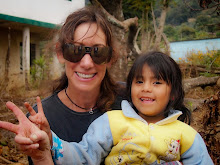
Like candidates running for office, every village ran to greet us as we passed before them. Everyone waves, some with both hands, some with only one, as the other holds on to the package of charcoal or water bucket on the head. Scores of people walking in both directions on both sides of the road, coming and going about their daily lives, also stop to wave and say hello. The kids in particular, are the most enthusiastic. Sometimes shoeless, sometimes not, they run after us on their spindly legs waving and cheering and grinning so wide their white teeth are visible from our high perch. They call out to us, laughing and yelling and waving until we can no longer see or hear them when we look back.
A word about the African couture: its obvious that most of the clothing worn by the natives throughout Africa are donations made to local charities in the western world, mostly the US, sold to middlemen and then resold to local merchants and charities. T-shirts advertise all manner of corporations, organizations and products: “The University of Tennessee Athletic Dept.,” “AIG,” and “Resprol” (misspelled and therefore sent to the charity bin). Shoes rarely fit: Children seem to wear what often look like their parents’ shoes, and adults’ shoes seem to barely fit at all. Those with shoes (and most have shoes) seem to simply wear those shoes that were available, or that they most fancied when bought. Size and comfort are irrelevant.
Our destination today is Kande Beach (pronounced “Candy”) on the shores of Lake Malawi, a lake which covers 1/3 of the country, and whose opposite shore is too far to see, although we know that Mozambique is out there somewhere. Like the Great Lakes, Lake Malawi looks like the ocean from its sandy beach shore and its waves are gentle. The wind is blowing hard and there is thunder and lightening in the distance. It’s sweltering hot, but I’m afraid to go in the water. We heard that half the leg of a Dutchman had been eaten by a Lake Malawi crocodile not that long ago. Bilharzia is also a risk. Worms that live in stagnant water, they enter and exit the body through pores in the skin after they have eaten through various organs and even the brain. We’re thinking of kayaking to cool off.
Anticipation is mounting for tonight’s meal: a whole roasted suckling pig on the spit. The pig and the charcoal was purchased from a roadside stand. Both the (live) pig and its driver met us at our destination. Here, at about 7 am, it was killed among much fanfare and ceremony and has since been turning slowly on its stick since then, head and all.
Wednesday, March 24, 2010


Saturday, March 20, 2010
Heaven!
I caved and wimped out. Yosy and I left the group tonight, for one night only, and checked in to a $350 hotel in Dar es Salaam before we begin our long push tomorrow towards Malawi. After a month on the road, I have all the electric, hot water, fast internet, and CNN I want, and gorgeous rooftop views of the Indian Ocean. I am so happy to have, even if just for 15 hours, all that which I have always taken for granted in the past.
There are no bugs, no mosquito netting and real wood, clean, dry floors. There's a bathtub and delicate soaps and shampoos. There's a scale and a full-length mirror!!! We are headed to a fancy dinner - African fusion - in a restaurant with clean, white tablecloths and dessert!!! I can't wait to have dessert - something chocolate. I've had no dessert since I got to this continent. Fruit, the last course in a mostly one-course country, doesn't count.
It's so good its a shame to go to sleep.
There are no bugs, no mosquito netting and real wood, clean, dry floors. There's a bathtub and delicate soaps and shampoos. There's a scale and a full-length mirror!!! We are headed to a fancy dinner - African fusion - in a restaurant with clean, white tablecloths and dessert!!! I can't wait to have dessert - something chocolate. I've had no dessert since I got to this continent. Fruit, the last course in a mostly one-course country, doesn't count.
It's so good its a shame to go to sleep.
Friday, March 19, 2010
DAR ES SAALAM
Also known as “Dar is a Slum,” Dar is Tanzania’s largest city. Sitting on the Indian Ocean on the country’s eastern coast, it is a large, smelly, dusty, polluted place, teeming with people from all over the African continent and the Arab world. Vendors sell their wares either on the street itself or from lean-to’s made from corrugated metal. While there are some modern high-risers, it is mostly a typical third-world port city, albeit something out of the 1800’s, no. . . make that the 1700's. I half expected to bump into Johnny Depp in his swash-buckling best, along with his merry band of co-pirates, as well as Sinbad and Popeye, and every Arab slave trader from back in the day. Dar is however, our launching pad for the 2-hour ferry to Zanzibar, an offshore archipelago, that includes the Island of Zanzibar, otherwise known as the “Spice Island.”
We finally landed in Africa’s paradise yesterday. We were a little apprehensive. We had learned from others along our route that Zanzibar had been without electricity for over 3 months. The temperature is above 100 degrees and the humidity comes close to that. The heat is truly oppressive. We were all dripping wet by 10 a.m., with dirt and sweat and salt air streaming down our faces. My hair was a mass of tangles and frizz. No electricity means of course, no air conditioning, no fan, no toilets, no internet and, a nighttime trip back to the room or a bathroom requires navigation by the stars of the southern sky. Tanzania, once known as Tanganyika, is the compromise forged between the mainland and the Zanzibari islands after years of civil war. Over 90% of the archipelago is Muslim, while the mainland is Christian. Zanzibar was the capital of the world for spice and slave trading in the 1200's. We had heard that the Norwegians were trying to fix the underwater electric cable and that if they succeeded there would be electricity when we arrived. But if they failed there would be no electricity until 2012 when the Americans were contracted to lay a new line.
I got a little nervous as I saw the people being packed into the ferry. I read about these Indonesian, South American and African overcrowded ferries that capsize with the women and children going down first. The (live) chickens of the family standing next to us in line escaped from their basket and the father was running hard to catch them. (Which only reminds me of the goat we saw as we drove toward Dar which was tied to the roof of a double trailer truck - obviously the long-distance driver’s dinner). On the other side of us was a class of schoolgirls, chadors and all, while ahead were the ferry ticket takers – moving at African speed. Once we boarded, Surprise! Surprise! Everything was orderly and we all had seats.
Lucky again! The Norwegians were successful and Zanzibar got its electric groove back only 2 days before our arrival. But joy soon turned into reality. The electricity, we had forgotten, was African electricity – it is only turned on early in the morning and at night for just a few hours. Our a/c did not work at all and the ceiling fan died at 3 a.m. when the electric shut down. The toilet works intermittently and our neighbors don’t have water. But, life is good. The sea is about 88 degrees, there’s a gentle breeze (in the shade) and the fish is fresh. It feels good to be off the road for a bit.
The adventure will continue the day after tomorrow when we head back to Dar and continue south through Malawi and finally, Victoria Falls in Zambia. Who knows when we will be connected again?
We finally landed in Africa’s paradise yesterday. We were a little apprehensive. We had learned from others along our route that Zanzibar had been without electricity for over 3 months. The temperature is above 100 degrees and the humidity comes close to that. The heat is truly oppressive. We were all dripping wet by 10 a.m., with dirt and sweat and salt air streaming down our faces. My hair was a mass of tangles and frizz. No electricity means of course, no air conditioning, no fan, no toilets, no internet and, a nighttime trip back to the room or a bathroom requires navigation by the stars of the southern sky. Tanzania, once known as Tanganyika, is the compromise forged between the mainland and the Zanzibari islands after years of civil war. Over 90% of the archipelago is Muslim, while the mainland is Christian. Zanzibar was the capital of the world for spice and slave trading in the 1200's. We had heard that the Norwegians were trying to fix the underwater electric cable and that if they succeeded there would be electricity when we arrived. But if they failed there would be no electricity until 2012 when the Americans were contracted to lay a new line.
I got a little nervous as I saw the people being packed into the ferry. I read about these Indonesian, South American and African overcrowded ferries that capsize with the women and children going down first. The (live) chickens of the family standing next to us in line escaped from their basket and the father was running hard to catch them. (Which only reminds me of the goat we saw as we drove toward Dar which was tied to the roof of a double trailer truck - obviously the long-distance driver’s dinner). On the other side of us was a class of schoolgirls, chadors and all, while ahead were the ferry ticket takers – moving at African speed. Once we boarded, Surprise! Surprise! Everything was orderly and we all had seats.
Lucky again! The Norwegians were successful and Zanzibar got its electric groove back only 2 days before our arrival. But joy soon turned into reality. The electricity, we had forgotten, was African electricity – it is only turned on early in the morning and at night for just a few hours. Our a/c did not work at all and the ceiling fan died at 3 a.m. when the electric shut down. The toilet works intermittently and our neighbors don’t have water. But, life is good. The sea is about 88 degrees, there’s a gentle breeze (in the shade) and the fish is fresh. It feels good to be off the road for a bit.
The adventure will continue the day after tomorrow when we head back to Dar and continue south through Malawi and finally, Victoria Falls in Zambia. Who knows when we will be connected again?
Subscribe to:
Posts (Atom)