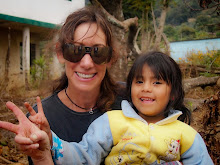
Three weeks at home and the memories are quickly fading. I've made a video of the trip, amassing all the most descriptive photos from all 7 countries visited and putting them in one place, to music. (see "View the Video," above, and click on the movie once to open it, then again to start it). I have already begun to plan a trip back - West Africa and southern AFrica in the winter of 2011. Both of these tasks help to keep my mind from leaving Africa. But writing my afterthoughts here, will help too.
Everyone keeps asking, "What was your favorite part?," "What stands out the most?"
The deep, bright color of the terra cotta soil. It seemed to be everywhere - not just in the dirt roads and the fields, but in the mud walls of the houses, the bark of the tree trunks, reflected in the sky. I even saw a reddish tint in the locals' skin color. I did. I swear I did. The color formed a rich background for the different shades of black skin, the colors of the leaves, the animals, the plains and even the clothing.
Nor can I ever forget the night we camped in a field, somewhere in Uganda, or was it Kenya? Road damage from the rains had seriously delayed our arrival at a particular location. We were never going to make it before nightfall. The safest thing to do was to camp in an open field. It was so dark by the time we stopped that we didn't really know what kind of field it was, or what was nearby, if anything. (I woke up next to a 4 foot-high termite mound). The Village Chief was consulted first, of course, and with his permission and protection we pitched our tents and had a very quick, tasteless dinner. But at 5 am I was awakened by the most mesmerizing of sounds. Somewhere in the distance I heard a woman chanting, calling, singing, beseeching, pleading. And a group responded in kind. This responsive solo/chorus musical dance continued for about 1 hour. It was haunting. Was someone in trouble? Were they praying to the gods? Or was I completely mistaken? Could it be an animal that was causing some kind of ruckus? No, no, it was definitely a woman. Her voice was loud and insistent and strained to reach as far as possible. How could this woman not be tired? She was relentless. And the chorus grew as the day got lighter.
The men who had been guarding us all night, told us at breakfast that the song was the Village being called to awaken. The woman was their alarm clock. And the responsive singing got louder as more villagers awoke to start their day. Although I have heard and always loved the sound of the Imams calling Muslims to prayer from Minarets in the early morning hours, nothing matched the raw simplicity of this.
And, of course, there were the people. Everywhere we went, in every country, without exception, the people greeted us with 2-handed waves, like the Queen's wave, but with both hands (and much more enthusiasm). They are industrious people. Africans live, not just survive, despite the lack of running water, nearby health care, electricity, sidewalks, or roads. They lack wheel barrels, schools that teach, police that protect, even umbrellas, and sometimes, enough sunny days to dry their clothes.
For me the hardest thing was staying clean. Although most nights I had access to showers (perhaps with only cold water), the dust flies everywhere and both my body and clothes were always dirty at the end of the day. How hard it must be for the Africans who don't have the luxury of even a cold shower nearby.
And everyone walked. They walked with babies on their backs and on their fronts, they walked with bananas and buckets of water on their heads, they walked with bicycles carrying loads of firewood and families of 5. And, of course, it always seemed that they were walking uphill. They were coming and going to market, to funerals, to school and to their fields. In America the only people who walk are the exercisers - walking in a hurry to raise their heartbeat. Africans walk slowly to conserve their energy and in a rhythm that is synced to the rain, or the strength of the sun, or to eachother.
When I first got home and walked through the door, I was, at that very first instant, stunned by the excess - do I really need 15 pocketbooks and so many pairs of shoes? Does the grocery store have to be the size of a football field and have 500 different kinds of cereal? Why so many restaurants, roads, and types of deodorant? It was all so unnecessary and disproportionate to needs. It was just plain . . . . excessive.
I have many more thoughts and rememberances - but those I will keep to myself - for now.
Tuesday, April 27, 2010


Saturday, April 3, 2010
CAPE TOWN
Paris has the Eiffel Tower, Rome has the Coliseum. St. Louis has its arches and New York has . . . well, everything. But Cape Town has Table Mountain, perhaps the only urban area with a natural, not man-made icon. Smack in the middle of this gorgeous city is an enormous, 3,000-foot high, black granite mountain, with a completely flat top – hence its name. Lion's Head and Signal Hill are two small, pointy-top mountains that flank it on either side. A climate phenomenon creates low-lying clouds that often cover the table top and roll down to the sea, draping over the mountain’’s sides – and is known as the “tablecloth.” With no time to climb up one of the 300 paths, we took the cable car, which rotates as it ascends, 360 degrees, so that the view is constantly changing.
The view from above will always be remembered.
The enormity and vastness of the table surface hit first as we exited the crowded cable car. We couldn't see to the end of the table. As we made our way to the edge of the surface top, along rock pathways, the view took our breathe away. The sea in all directions, with the city sitting comfortably between the mountain and the water, winding its way all around the base. The fog tablecloth had descended and was sitting just offshore.
We walked around the tabletop for about two hours, with a new surprise at every edge and view overhang. The lawyer in me, no, the AMERICAN in me, was astounded that there were no railings along the table's edges - just like on the gorge's edge in Victoria Falls. Hasn't anyone ever fallen overboard? Don't the authorities on this continent worry about fallen tourists and other litigious souls? How refreshing it is to literally, live on the edge when on Municipal property. We could stare death and daring in the face, with relatively little risk. The adrenaline was pumping.
We reluctantly scurried and left the mountain and its heady view and vast openness to rent
a car and head to the wine country, only one short, traffic-free hour from the center of the city. We had a glorious, lazy, lunch on the patio of a decadent winery, and walked through the very-Litchfield-like town until we headed back to the city for a quick nap.
Dinner was special. We went to a place called “Africa Café,” owned by an Australian and his native wife. There was no menu. Dinner was described as "Communal," and the 16 small dishes represented cuisine from all over Africa. There was Kenyan cocunut chicken, Ethiopian sik sik wat, (don't ask), Xhosa ithanga fritters, Malawi mbatata cheese & sim sim balls, (no, not THAT kind), Moroccan herb salad, and Swaziland pineapple cake with fresh yogurt, to name just a few. We ate from brightly-colored and unmatched ceramics dishes served by natives, dressed in clothing that coordinated with the colors of the dishes, the tablecloths and the walls. Everywhere there was color - African color. The servers sang and danced as they served and the building was a leftover from the Colonial era. It was the freshest, tastiest food I have had in a very long time.
On our second and last full day here we drove about 1 hour away to Cape Point, the southernmost point in Africa and the place where the Indian and Atlantic Oceans meet. The drive was impressive. Miles and miles and miles of just the right amount of winding road, along a very rugged coast on our right and the granite and pink sandstone mountains on our left. It was very similar to the Pacific Coast Highway in California, but the mountains were not as far from the coast and the road was sea level. And this was Africa - not Hollywood! And, there were baboons, ostrich and penquins along the way.
Dinner was back in Cape Town, on the waterfront, outdoors, with heaters, as the South African summer is quickly waning and autumn is setting in.
We are packing now. Our flight home is scheduled to depart at 3 pm.
Goodbye Africa.
The view from above will always be remembered.
The enormity and vastness of the table surface hit first as we exited the crowded cable car. We couldn't see to the end of the table. As we made our way to the edge of the surface top, along rock pathways, the view took our breathe away. The sea in all directions, with the city sitting comfortably between the mountain and the water, winding its way all around the base. The fog tablecloth had descended and was sitting just offshore.
We walked around the tabletop for about two hours, with a new surprise at every edge and view overhang. The lawyer in me, no, the AMERICAN in me, was astounded that there were no railings along the table's edges - just like on the gorge's edge in Victoria Falls. Hasn't anyone ever fallen overboard? Don't the authorities on this continent worry about fallen tourists and other litigious souls? How refreshing it is to literally, live on the edge when on Municipal property. We could stare death and daring in the face, with relatively little risk. The adrenaline was pumping.
We reluctantly scurried and left the mountain and its heady view and vast openness to rent
a car and head to the wine country, only one short, traffic-free hour from the center of the city. We had a glorious, lazy, lunch on the patio of a decadent winery, and walked through the very-Litchfield-like town until we headed back to the city for a quick nap.
Dinner was special. We went to a place called “Africa Café,” owned by an Australian and his native wife. There was no menu. Dinner was described as "Communal," and the 16 small dishes represented cuisine from all over Africa. There was Kenyan cocunut chicken, Ethiopian sik sik wat, (don't ask), Xhosa ithanga fritters, Malawi mbatata cheese & sim sim balls, (no, not THAT kind), Moroccan herb salad, and Swaziland pineapple cake with fresh yogurt, to name just a few. We ate from brightly-colored and unmatched ceramics dishes served by natives, dressed in clothing that coordinated with the colors of the dishes, the tablecloths and the walls. Everywhere there was color - African color. The servers sang and danced as they served and the building was a leftover from the Colonial era. It was the freshest, tastiest food I have had in a very long time.
On our second and last full day here we drove about 1 hour away to Cape Point, the southernmost point in Africa and the place where the Indian and Atlantic Oceans meet. The drive was impressive. Miles and miles and miles of just the right amount of winding road, along a very rugged coast on our right and the granite and pink sandstone mountains on our left. It was very similar to the Pacific Coast Highway in California, but the mountains were not as far from the coast and the road was sea level. And this was Africa - not Hollywood! And, there were baboons, ostrich and penquins along the way.
Dinner was back in Cape Town, on the waterfront, outdoors, with heaters, as the South African summer is quickly waning and autumn is setting in.
We are packing now. Our flight home is scheduled to depart at 3 pm.
Goodbye Africa.
REENTRY
We knew we had returned to the modern world immediately upon our arrival to the Johannesburg, South Africa airport, a layover on our way to Cape Town.
We were dazzled by the machine. The 10 large TV screens hanging in a circle in the upper reaches of the domed ceiling of the central hub of the airport were all perfectly coordinated. The pictures on each screen moved like synchronized swimmers, going from faces to toast to warnings about hazardous materials at the exact same instant. Everyone moved at a fast, but not frenzied pace, and with such purpose! The toilets flushed, the lights were bright and the floors, the walls, the countertops all glimmered. The clothes that people wore were clean, not ragged, and their outfits matched. Everyone was wearing shoes, and the shoes fit. And everywhere, as far as the eye could see, were white people. Only the employees – the janitors, the baggage handlers, the check-in clerks behind the airlines counters, were black. But this is a black country. Overwhelmingly black – 40 to 1 black. Where were they all? The employee uniforms were clean, pressed and looked brand new. The employees had a pep in their step and didn’t look bored. They were moving, not sitting. They went out of their way to help us.
Our ride into the city was no less shocking. Road maintenance crews were using bulldozers, backhoes, front-end loaders and earth moving machines, equipment that we haven’t seen in a very long time – and in such numbers. In the “other” Africa, road maintenance crews used only shovels. There was passenger traffic - in both directions - and there were passenger cars, gleaming towers, signs, traffic controls. There was a fast highway, with guardrails, and the city could be seen in the distance.
Hotel check-in was a breeze. The staff (black) was awake, they smiled and sought to carry our bags. The room has a heated bathroom floor, a shower AND a bathtub, a hair dryer and NO mosquito netting.
We fell into bed, anxious to begin our visit tomorrow morning.
We were dazzled by the machine. The 10 large TV screens hanging in a circle in the upper reaches of the domed ceiling of the central hub of the airport were all perfectly coordinated. The pictures on each screen moved like synchronized swimmers, going from faces to toast to warnings about hazardous materials at the exact same instant. Everyone moved at a fast, but not frenzied pace, and with such purpose! The toilets flushed, the lights were bright and the floors, the walls, the countertops all glimmered. The clothes that people wore were clean, not ragged, and their outfits matched. Everyone was wearing shoes, and the shoes fit. And everywhere, as far as the eye could see, were white people. Only the employees – the janitors, the baggage handlers, the check-in clerks behind the airlines counters, were black. But this is a black country. Overwhelmingly black – 40 to 1 black. Where were they all? The employee uniforms were clean, pressed and looked brand new. The employees had a pep in their step and didn’t look bored. They were moving, not sitting. They went out of their way to help us.
Our ride into the city was no less shocking. Road maintenance crews were using bulldozers, backhoes, front-end loaders and earth moving machines, equipment that we haven’t seen in a very long time – and in such numbers. In the “other” Africa, road maintenance crews used only shovels. There was passenger traffic - in both directions - and there were passenger cars, gleaming towers, signs, traffic controls. There was a fast highway, with guardrails, and the city could be seen in the distance.
Hotel check-in was a breeze. The staff (black) was awake, they smiled and sought to carry our bags. The room has a heated bathroom floor, a shower AND a bathtub, a hair dryer and NO mosquito netting.
We fell into bed, anxious to begin our visit tomorrow morning.
Wednesday, March 31, 2010
AFRICA WINS AGAIN
Nothing is easy in Africa.
We took a taxi (at a cost of $20) to the airport for our flight to Cape Town only to discover upon arrival that our flight was not departing from Livingstone Airport in Zambia, but rather from Victoria Falls Airport in Zimbabwe, just over the nearby border. We made a mad dash by taxi ($30) to the border, where we were dumped with our bags. We signed out of Zambia and grabbed another taxi ($10) through the 2-mile no man’s land between the two countries. We were once again let out of the taxi (with our bags) at the Zim border, signed in to Zimbabwe ($60 for two visas), and then, bags in tow, grabbed yet another taxi to the airport($30). In about 20 minutes, we finally arrived, and barely made it in time for our flight. We were charged for overweight bags ($40), but were at least bumped up to Business Class as all economy seats were taken.
We were starving. But the airport shelves were bare – completely, horribly bare. Except for ½ bottle of scotch and a couple of cans of soda the bar was empty. The “Duty Free” shop had 3 bottles of perfume and a couple of tourist knickknacks – everything, was the same price - $10. Yosy managed to find the only bag of potato chips, apparently in the entire country, in a kiosk that pretended to sell food. It was all they had.
Thank God for Business Class. As the only travelers in the front of the British Airways plane, we were served all kinds of good things – fresh salad, cheese, (CHEESE! Haven’t seen real cheese in 6 weeks), chocolate, crackers, dried fruits. Gourmet dining. Everything tastes so delicious.
But the inconveniences we suffered were all worth it because we saw Victoria Falls (“The Smoke that Thunders”) from the air. The mist was shooting up hundreds of feet into the sky. It was hard to know where the water smoke ended and the clouds began. The Falls are massive, and I now believe that the most powerful thing on earth is water.
We have only 1 ½ hours in Johannesburg to get our luggage, pass through immigration and customs, and make it to our gate for the flight to Cape Town. I’m quickly losing confidence that things will go as planned today.
We took a taxi (at a cost of $20) to the airport for our flight to Cape Town only to discover upon arrival that our flight was not departing from Livingstone Airport in Zambia, but rather from Victoria Falls Airport in Zimbabwe, just over the nearby border. We made a mad dash by taxi ($30) to the border, where we were dumped with our bags. We signed out of Zambia and grabbed another taxi ($10) through the 2-mile no man’s land between the two countries. We were once again let out of the taxi (with our bags) at the Zim border, signed in to Zimbabwe ($60 for two visas), and then, bags in tow, grabbed yet another taxi to the airport($30). In about 20 minutes, we finally arrived, and barely made it in time for our flight. We were charged for overweight bags ($40), but were at least bumped up to Business Class as all economy seats were taken.
We were starving. But the airport shelves were bare – completely, horribly bare. Except for ½ bottle of scotch and a couple of cans of soda the bar was empty. The “Duty Free” shop had 3 bottles of perfume and a couple of tourist knickknacks – everything, was the same price - $10. Yosy managed to find the only bag of potato chips, apparently in the entire country, in a kiosk that pretended to sell food. It was all they had.
Thank God for Business Class. As the only travelers in the front of the British Airways plane, we were served all kinds of good things – fresh salad, cheese, (CHEESE! Haven’t seen real cheese in 6 weeks), chocolate, crackers, dried fruits. Gourmet dining. Everything tastes so delicious.
But the inconveniences we suffered were all worth it because we saw Victoria Falls (“The Smoke that Thunders”) from the air. The mist was shooting up hundreds of feet into the sky. It was hard to know where the water smoke ended and the clouds began. The Falls are massive, and I now believe that the most powerful thing on earth is water.
We have only 1 ½ hours in Johannesburg to get our luggage, pass through immigration and customs, and make it to our gate for the flight to Cape Town. I’m quickly losing confidence that things will go as planned today.
Tuesday, March 30, 2010
MONKEYS AND ZEBRAS AND CROCS (Oh My!)
I failed to mention in my last entry, that I did finally venture into the allegedly croc and bilharia-infested Lake Malawi. It was late afternoon and we had spent the day walking up and down the beach. Yosy and I befriended a local vendor (it only cost us a t-shirt) who gave us a private tour of the few villages that sit right on the shore front. We went into homes, had conversations with the locals and even played a few games with the kids. Yosy helped one of the local fisherman pull his boat, a hollowed-out tree trunk, onto land. The villages were spotless. Women actually sweep the sand around their straw huts to get rid of any debris that washes up. I had passed the villages the day before on a late-afternoon jog. As always, Mzungus (white people) are like celebrities. All along my run people waved and children ran to greet me and hold my hand - some even ran along with me for a few hundred feet. When the run was over, I knew I had to return and meet some of these people. Our vendor-cum-tour guide was our entree to their world. These Africans thrive in spite of their governments, who do absolutely nothing for them - they have no water, no sewer, no roads, no sidewalks. There can be as many as 70 kids in one classroom. Healthcare is practically non-existent. But the Kenyans, Ugandans, Rwandans, Tanzanians and Zambians, manage to live, not just exist, despite the failures of their leaders.
Anyway, it was late afternoon and I was so hot. We had an impromptu game of volleyball on the beach and I couldn't take the heat anymore. The lake was calling me. I dove in and swam and swam and swam. The water was quiet and cool. And the crocs were otherwise engaged. As for the bilharzia worm - a simple test and pill will cure that when I get home, if needed.
Two mornings ago someone accidentally left the gate open to the hotel property where we were staying in Lusaka, the capital of Zambia. We had just finished breakfast and were preparing to leave when a small herd of Zebra wandered in and among the camp grounds. We were so close to them we could practically pet them. It was amazing. The night before some monkeys were sitting just outside our door. I was certainly more surprised than they when our paths crossed.
We are now in Livingstone (named for THE Dr. Livingstone, I presume). Victoria Falls are only 2500 feet from our hotel. The Falls are called The Smoke That Thunders in the the local language - and for good reason. In our walk around the Falls today we got drenched. They are so huge (second biggest in the world) that the volume of water produces thick mist - so thick that the Falls are not even visible unless and until there is a break in the mist and the sun shines on them. There is a very wet, slippery path opposite the Falls, across a gorge that is only a few hundred feet from all that falling water. The path runs along the gorge's rim, with no handrails. I cannot believe that some tourist has not slipped and fallen into the whirlpool below. The Falls are huge and wide and go on forever. They span the border of Zambia and Zimbabwe. The path is so close to the Falls that the spray of the water crashing into the gorge creates torrential, unrelenting, unceasing, rain in certain areas. Although we were wearing TWO rain ponchos, we were completely drenched - from head to foot. The smokey mist was so dense, and the roar was so loud we were overwhelmed. Glimpses of the Falls were mesmerizing. We just stood and watched for long stretches of time without moving.
I was very level-handed and mature today. Instead of doing the bungee jump from a bridge that spans the gorge into what is known as the Boiling Pot, below, I opted to do the zip line that goes across the gorge just below the Falls themselves. I was suspended 700 feet above the swirling water, with the thunder echoing from the cliffs, and simply sailed across. There was a perfectly round (yes, round) rainbow just below me, framing the whirlpool. I was terrified at first, but then relaxed and enjoyed the experience, which was quite like sailing in mid-air.
I have been starved for some protein since I've been here, eating no meat and only eggs, every now and then. So, yesterday, for dinner, I had crocodile appetizer. Delicious - it tasted like a cross between chicken and shrimp tempura.
Our hotel is right on the Zambesi River. Our room, with balcony,is gorgeous and although we can see the smoke of the Falls, (which rises hundreds of feet in the air), we can't hear its thunder.
We had a dinner boat ride on the Zambesi and saw some hippos. Ho hum. No big deal anymore to see wildlife. They are all around us - monkeys in the trees above our heads (or on the walkway), large spiders which make their nets in the unlikeliest of places, giraffes only outside the gates, and crocs on the dinner plate.
We are still partying with the group - We are feeling separation anxiety as we prepare to leave tomorrow morning for our flight to Cape Town.
This trip has been magical. I would stay if I didn't have kids, a dog, and bills to pay.
Anyway, it was late afternoon and I was so hot. We had an impromptu game of volleyball on the beach and I couldn't take the heat anymore. The lake was calling me. I dove in and swam and swam and swam. The water was quiet and cool. And the crocs were otherwise engaged. As for the bilharzia worm - a simple test and pill will cure that when I get home, if needed.
Two mornings ago someone accidentally left the gate open to the hotel property where we were staying in Lusaka, the capital of Zambia. We had just finished breakfast and were preparing to leave when a small herd of Zebra wandered in and among the camp grounds. We were so close to them we could practically pet them. It was amazing. The night before some monkeys were sitting just outside our door. I was certainly more surprised than they when our paths crossed.
We are now in Livingstone (named for THE Dr. Livingstone, I presume). Victoria Falls are only 2500 feet from our hotel. The Falls are called The Smoke That Thunders in the the local language - and for good reason. In our walk around the Falls today we got drenched. They are so huge (second biggest in the world) that the volume of water produces thick mist - so thick that the Falls are not even visible unless and until there is a break in the mist and the sun shines on them. There is a very wet, slippery path opposite the Falls, across a gorge that is only a few hundred feet from all that falling water. The path runs along the gorge's rim, with no handrails. I cannot believe that some tourist has not slipped and fallen into the whirlpool below. The Falls are huge and wide and go on forever. They span the border of Zambia and Zimbabwe. The path is so close to the Falls that the spray of the water crashing into the gorge creates torrential, unrelenting, unceasing, rain in certain areas. Although we were wearing TWO rain ponchos, we were completely drenched - from head to foot. The smokey mist was so dense, and the roar was so loud we were overwhelmed. Glimpses of the Falls were mesmerizing. We just stood and watched for long stretches of time without moving.
I was very level-handed and mature today. Instead of doing the bungee jump from a bridge that spans the gorge into what is known as the Boiling Pot, below, I opted to do the zip line that goes across the gorge just below the Falls themselves. I was suspended 700 feet above the swirling water, with the thunder echoing from the cliffs, and simply sailed across. There was a perfectly round (yes, round) rainbow just below me, framing the whirlpool. I was terrified at first, but then relaxed and enjoyed the experience, which was quite like sailing in mid-air.
I have been starved for some protein since I've been here, eating no meat and only eggs, every now and then. So, yesterday, for dinner, I had crocodile appetizer. Delicious - it tasted like a cross between chicken and shrimp tempura.
Our hotel is right on the Zambesi River. Our room, with balcony,is gorgeous and although we can see the smoke of the Falls, (which rises hundreds of feet in the air), we can't hear its thunder.
We had a dinner boat ride on the Zambesi and saw some hippos. Ho hum. No big deal anymore to see wildlife. They are all around us - monkeys in the trees above our heads (or on the walkway), large spiders which make their nets in the unlikeliest of places, giraffes only outside the gates, and crocs on the dinner plate.
We are still partying with the group - We are feeling separation anxiety as we prepare to leave tomorrow morning for our flight to Cape Town.
This trip has been magical. I would stay if I didn't have kids, a dog, and bills to pay.
Sunday, March 28, 2010
ZAMBIA
We drove 12 hours yesterday from Lilongwe, the capital of Malawi, to the outskirts of Lusaka, the capital of Zambia. It is the first "real" city I've seen in 6 weeks - or more accurately, the city that most resembles a "real" city. There are sidewalks, hi-rises, traffic lights (and traffic) and shopping malls. I feel so civilised. Only 4 more days to Victoria Falls and the end of the overland trip. Yosy and I then fly to Cape Town for 3 days then home.
I can feel that the trip is winding down. And, its very sad.
I can feel that the trip is winding down. And, its very sad.
Wednesday, March 24, 2010
MALAWI
The road to Malawi from Dar es Salaam is long – way too long. I’m starting to get tired. Fifteen hours on a one-lane highway, in which there is two-way traffic, through some of the most verdant, quiet, peaceful hills and valleys I’ve ever seen. But its hot – over 95 degrees. There’s no a/c in the truck and if the windows are open too wide the hot wind blows dry and sticky in our faces, and disrupts our scrabble game, played to kill the boredom. There are “H’s” and “I’s” all over the floor, pieces so small that our hands have trouble placing them on the board and once lost, are gone forever among the mud, sand, cracker crumbs and general travel detritus strewn across the truck’s black bottom.
We land in Iringa, in southwestern Tanzania after 8pm and make our way to the restaurant in absolute darkness, guided only by the stars and the dirt pathways, through the brush of this high plateau. The English owners have converted mud and dung hut ruins into an eco-friendly restaurant, with only candlelight to illuminate the tables and their beautiful African-motif tablecloths. The walls are a warm rust color, uneven in height and cracked. There is an enormous palapa-thatched cone roof that rises 30 feet or more in the air. The floor is dirt and the theme is definitely primitive-chic. Each room in the “house” contains tables – some rooms are big enough only for a table for two – our room holds all 20 of us at one long banquet table. There are only about 3 or 4 rooms in all.
We start with hot squash soup, thick and spicy. The main course is “ungali,” a local staple made of maize and tasting much like polenta. Anything can be added to give it taste: tonight we have spicy meatballs in a tomato-type sauce. The vegetarians get a baked mound of cheese in the same sauce – delicious. It tastes like cheese fondue without the croutons. We are also served our first good taste of bread since we’ve been in Africa. Real, hot, freshly-baked rolls – until now there’s only been sliced white bread, or in fancier places, white bread in the shape of a baquette or a roll.
Of course, no dessert – there never is.
Although we leave as we came – by the blackness of night, we are satiated and warm, ready for another day’s long drive.
At about 2pm today, we crossed the Tanzanian border and another time zone into Malawi.
I have been meaning for weeks now to write about the sights along the roads. But its good that I waited this long. Yesterday, because the road was slow and the traffic almost non-existent, we were able to sit for the first time on the specially-designed seats on the roof of the truck. And all that we have experienced until now was intensified by the unobstructed, open-air view.
Like candidates running for office, every village ran to greet us as we passed before them. Everyone waves, some with both hands, some with only one, as the other holds on to the package of charcoal or water bucket on the head. Scores of people walking in both directions on both sides of the road, coming and going about their daily lives, also stop to wave and say hello. The kids in particular, are the most enthusiastic. Sometimes shoeless, sometimes not, they run after us on their spindly legs waving and cheering and grinning so wide their white teeth are visible from our high perch. They call out to us, laughing and yelling and waving until we can no longer see or hear them when we look back.
A word about the African couture: its obvious that most of the clothing worn by the natives throughout Africa are donations made to local charities in the western world, mostly the US, sold to middlemen and then resold to local merchants and charities. T-shirts advertise all manner of corporations, organizations and products: “The University of Tennessee Athletic Dept.,” “AIG,” and “Resprol” (misspelled and therefore sent to the charity bin). Shoes rarely fit: Children seem to wear what often look like their parents’ shoes, and adults’ shoes seem to barely fit at all. Those with shoes (and most have shoes) seem to simply wear those shoes that were available, or that they most fancied when bought. Size and comfort are irrelevant.
Our destination today is Kande Beach (pronounced “Candy”) on the shores of Lake Malawi, a lake which covers 1/3 of the country, and whose opposite shore is too far to see, although we know that Mozambique is out there somewhere. Like the Great Lakes, Lake Malawi looks like the ocean from its sandy beach shore and its waves are gentle. The wind is blowing hard and there is thunder and lightening in the distance. It’s sweltering hot, but I’m afraid to go in the water. We heard that half the leg of a Dutchman had been eaten by a Lake Malawi crocodile not that long ago. Bilharzia is also a risk. Worms that live in stagnant water, they enter and exit the body through pores in the skin after they have eaten through various organs and even the brain. We’re thinking of kayaking to cool off.
Anticipation is mounting for tonight’s meal: a whole roasted suckling pig on the spit. The pig and the charcoal was purchased from a roadside stand. Both the (live) pig and its driver met us at our destination. Here, at about 7 am, it was killed among much fanfare and ceremony and has since been turning slowly on its stick since then, head and all.
We land in Iringa, in southwestern Tanzania after 8pm and make our way to the restaurant in absolute darkness, guided only by the stars and the dirt pathways, through the brush of this high plateau. The English owners have converted mud and dung hut ruins into an eco-friendly restaurant, with only candlelight to illuminate the tables and their beautiful African-motif tablecloths. The walls are a warm rust color, uneven in height and cracked. There is an enormous palapa-thatched cone roof that rises 30 feet or more in the air. The floor is dirt and the theme is definitely primitive-chic. Each room in the “house” contains tables – some rooms are big enough only for a table for two – our room holds all 20 of us at one long banquet table. There are only about 3 or 4 rooms in all.
We start with hot squash soup, thick and spicy. The main course is “ungali,” a local staple made of maize and tasting much like polenta. Anything can be added to give it taste: tonight we have spicy meatballs in a tomato-type sauce. The vegetarians get a baked mound of cheese in the same sauce – delicious. It tastes like cheese fondue without the croutons. We are also served our first good taste of bread since we’ve been in Africa. Real, hot, freshly-baked rolls – until now there’s only been sliced white bread, or in fancier places, white bread in the shape of a baquette or a roll.
Of course, no dessert – there never is.
Although we leave as we came – by the blackness of night, we are satiated and warm, ready for another day’s long drive.
At about 2pm today, we crossed the Tanzanian border and another time zone into Malawi.
I have been meaning for weeks now to write about the sights along the roads. But its good that I waited this long. Yesterday, because the road was slow and the traffic almost non-existent, we were able to sit for the first time on the specially-designed seats on the roof of the truck. And all that we have experienced until now was intensified by the unobstructed, open-air view.
Like candidates running for office, every village ran to greet us as we passed before them. Everyone waves, some with both hands, some with only one, as the other holds on to the package of charcoal or water bucket on the head. Scores of people walking in both directions on both sides of the road, coming and going about their daily lives, also stop to wave and say hello. The kids in particular, are the most enthusiastic. Sometimes shoeless, sometimes not, they run after us on their spindly legs waving and cheering and grinning so wide their white teeth are visible from our high perch. They call out to us, laughing and yelling and waving until we can no longer see or hear them when we look back.
A word about the African couture: its obvious that most of the clothing worn by the natives throughout Africa are donations made to local charities in the western world, mostly the US, sold to middlemen and then resold to local merchants and charities. T-shirts advertise all manner of corporations, organizations and products: “The University of Tennessee Athletic Dept.,” “AIG,” and “Resprol” (misspelled and therefore sent to the charity bin). Shoes rarely fit: Children seem to wear what often look like their parents’ shoes, and adults’ shoes seem to barely fit at all. Those with shoes (and most have shoes) seem to simply wear those shoes that were available, or that they most fancied when bought. Size and comfort are irrelevant.
Our destination today is Kande Beach (pronounced “Candy”) on the shores of Lake Malawi, a lake which covers 1/3 of the country, and whose opposite shore is too far to see, although we know that Mozambique is out there somewhere. Like the Great Lakes, Lake Malawi looks like the ocean from its sandy beach shore and its waves are gentle. The wind is blowing hard and there is thunder and lightening in the distance. It’s sweltering hot, but I’m afraid to go in the water. We heard that half the leg of a Dutchman had been eaten by a Lake Malawi crocodile not that long ago. Bilharzia is also a risk. Worms that live in stagnant water, they enter and exit the body through pores in the skin after they have eaten through various organs and even the brain. We’re thinking of kayaking to cool off.
Anticipation is mounting for tonight’s meal: a whole roasted suckling pig on the spit. The pig and the charcoal was purchased from a roadside stand. Both the (live) pig and its driver met us at our destination. Here, at about 7 am, it was killed among much fanfare and ceremony and has since been turning slowly on its stick since then, head and all.
Saturday, March 20, 2010
Heaven!
I caved and wimped out. Yosy and I left the group tonight, for one night only, and checked in to a $350 hotel in Dar es Salaam before we begin our long push tomorrow towards Malawi. After a month on the road, I have all the electric, hot water, fast internet, and CNN I want, and gorgeous rooftop views of the Indian Ocean. I am so happy to have, even if just for 15 hours, all that which I have always taken for granted in the past.
There are no bugs, no mosquito netting and real wood, clean, dry floors. There's a bathtub and delicate soaps and shampoos. There's a scale and a full-length mirror!!! We are headed to a fancy dinner - African fusion - in a restaurant with clean, white tablecloths and dessert!!! I can't wait to have dessert - something chocolate. I've had no dessert since I got to this continent. Fruit, the last course in a mostly one-course country, doesn't count.
It's so good its a shame to go to sleep.
There are no bugs, no mosquito netting and real wood, clean, dry floors. There's a bathtub and delicate soaps and shampoos. There's a scale and a full-length mirror!!! We are headed to a fancy dinner - African fusion - in a restaurant with clean, white tablecloths and dessert!!! I can't wait to have dessert - something chocolate. I've had no dessert since I got to this continent. Fruit, the last course in a mostly one-course country, doesn't count.
It's so good its a shame to go to sleep.
Friday, March 19, 2010
DAR ES SAALAM
Also known as “Dar is a Slum,” Dar is Tanzania’s largest city. Sitting on the Indian Ocean on the country’s eastern coast, it is a large, smelly, dusty, polluted place, teeming with people from all over the African continent and the Arab world. Vendors sell their wares either on the street itself or from lean-to’s made from corrugated metal. While there are some modern high-risers, it is mostly a typical third-world port city, albeit something out of the 1800’s, no. . . make that the 1700's. I half expected to bump into Johnny Depp in his swash-buckling best, along with his merry band of co-pirates, as well as Sinbad and Popeye, and every Arab slave trader from back in the day. Dar is however, our launching pad for the 2-hour ferry to Zanzibar, an offshore archipelago, that includes the Island of Zanzibar, otherwise known as the “Spice Island.”
We finally landed in Africa’s paradise yesterday. We were a little apprehensive. We had learned from others along our route that Zanzibar had been without electricity for over 3 months. The temperature is above 100 degrees and the humidity comes close to that. The heat is truly oppressive. We were all dripping wet by 10 a.m., with dirt and sweat and salt air streaming down our faces. My hair was a mass of tangles and frizz. No electricity means of course, no air conditioning, no fan, no toilets, no internet and, a nighttime trip back to the room or a bathroom requires navigation by the stars of the southern sky. Tanzania, once known as Tanganyika, is the compromise forged between the mainland and the Zanzibari islands after years of civil war. Over 90% of the archipelago is Muslim, while the mainland is Christian. Zanzibar was the capital of the world for spice and slave trading in the 1200's. We had heard that the Norwegians were trying to fix the underwater electric cable and that if they succeeded there would be electricity when we arrived. But if they failed there would be no electricity until 2012 when the Americans were contracted to lay a new line.
I got a little nervous as I saw the people being packed into the ferry. I read about these Indonesian, South American and African overcrowded ferries that capsize with the women and children going down first. The (live) chickens of the family standing next to us in line escaped from their basket and the father was running hard to catch them. (Which only reminds me of the goat we saw as we drove toward Dar which was tied to the roof of a double trailer truck - obviously the long-distance driver’s dinner). On the other side of us was a class of schoolgirls, chadors and all, while ahead were the ferry ticket takers – moving at African speed. Once we boarded, Surprise! Surprise! Everything was orderly and we all had seats.
Lucky again! The Norwegians were successful and Zanzibar got its electric groove back only 2 days before our arrival. But joy soon turned into reality. The electricity, we had forgotten, was African electricity – it is only turned on early in the morning and at night for just a few hours. Our a/c did not work at all and the ceiling fan died at 3 a.m. when the electric shut down. The toilet works intermittently and our neighbors don’t have water. But, life is good. The sea is about 88 degrees, there’s a gentle breeze (in the shade) and the fish is fresh. It feels good to be off the road for a bit.
The adventure will continue the day after tomorrow when we head back to Dar and continue south through Malawi and finally, Victoria Falls in Zambia. Who knows when we will be connected again?
We finally landed in Africa’s paradise yesterday. We were a little apprehensive. We had learned from others along our route that Zanzibar had been without electricity for over 3 months. The temperature is above 100 degrees and the humidity comes close to that. The heat is truly oppressive. We were all dripping wet by 10 a.m., with dirt and sweat and salt air streaming down our faces. My hair was a mass of tangles and frizz. No electricity means of course, no air conditioning, no fan, no toilets, no internet and, a nighttime trip back to the room or a bathroom requires navigation by the stars of the southern sky. Tanzania, once known as Tanganyika, is the compromise forged between the mainland and the Zanzibari islands after years of civil war. Over 90% of the archipelago is Muslim, while the mainland is Christian. Zanzibar was the capital of the world for spice and slave trading in the 1200's. We had heard that the Norwegians were trying to fix the underwater electric cable and that if they succeeded there would be electricity when we arrived. But if they failed there would be no electricity until 2012 when the Americans were contracted to lay a new line.
I got a little nervous as I saw the people being packed into the ferry. I read about these Indonesian, South American and African overcrowded ferries that capsize with the women and children going down first. The (live) chickens of the family standing next to us in line escaped from their basket and the father was running hard to catch them. (Which only reminds me of the goat we saw as we drove toward Dar which was tied to the roof of a double trailer truck - obviously the long-distance driver’s dinner). On the other side of us was a class of schoolgirls, chadors and all, while ahead were the ferry ticket takers – moving at African speed. Once we boarded, Surprise! Surprise! Everything was orderly and we all had seats.
Lucky again! The Norwegians were successful and Zanzibar got its electric groove back only 2 days before our arrival. But joy soon turned into reality. The electricity, we had forgotten, was African electricity – it is only turned on early in the morning and at night for just a few hours. Our a/c did not work at all and the ceiling fan died at 3 a.m. when the electric shut down. The toilet works intermittently and our neighbors don’t have water. But, life is good. The sea is about 88 degrees, there’s a gentle breeze (in the shade) and the fish is fresh. It feels good to be off the road for a bit.
The adventure will continue the day after tomorrow when we head back to Dar and continue south through Malawi and finally, Victoria Falls in Zambia. Who knows when we will be connected again?
Thursday, March 18, 2010
MISCELLANY
A quick review of my blabber on this site made me realize that I have completely skipped over the smaller details of this amazing adventure. And, Judy asked lots of questions about the food – have we managed to stay healthy and well fed at the same time?
The short answer is an astounding “Yes.” Because most nights we are camping we buy, wash and cook our own food. Every few days, when passing through a “big” city, we stop and stock up. There are supermarkets here that rival the ones back home, although there may only be 2 lightbulbs illuminating the whole store. We can buy just about anything in these stores: toothpaste, yogurt, passion fruit juice, saran wrap, snickers’ bars and Pringles. Fresh fruit and vegetables are plentiful and delicious. For breakfast we usually have fruit salad, toast, and/or either pancakes (from scratch) or eggs. And, the Kenyan coffee is substantive and gives a good jolt. Lunch is a sandwich of lunch meats, salad, tuna or pasta. Dinner is goat or cow meat, pasta or rice and sweet potatoes, which are white here, not orange. NO DESSERT EVER is served. I’ve continued with the vegetarian regime I started about 9 months ago and so haven’t had the meat, but Yosy says its delicious.
Although our stomachs have been behaving, we have signs of Africa all over our bodies: I have three spider bites, one each on my wrist, foot and finger. A prick of a needle takes out the pus and some antibiotic cream and a band-aid is all that’s then needed to cure. It doesn’t hurt at all and I have no recollection of ever being bitten. Low-lying acacia trees have 3 inch, very sharp thorns. I’ve been attached by these several times when making a pit stop along the road, and it hurts like hell until you disconnect yourself from the trees. They leave little red dots where they’ve stuck you, which look quite like a mosquito bite, so a few of these are decorating my rear end and arm. I woke up this morning with a scab on my forehead and have no idea what that is. Of course, we are quite tan, despite the gobs of suntan cream we’ve been using – we’re only 4 degrees south of the equator, so the sun is very strong. My feet are filthy and cracked – its hard to get them really clean and every day we are covered in dust. In fact, the hardest thing about being here is staying clean. Its over 95 degrees and showers only trickle down when available. But that’s the worst of it. NO ONE has gotten sick in our group (knock wood).
I finally saw, after a wait of more than 30 years, a baobab tree. There were pictures of the tree in the Little Prince, a book I read sophmore year in college French, and I loved the exoticness of the tree – they don’t resemble anything that we have in the US, nor have I seen them anywhere else in my travels. In the book, they look like old souls who silently watch and wait. They always stand alone and have thick wide, stump-like trunks – almost as wide as they are tall. The branches, which start fairly high up on the trunk, are few and far between and are also thick and very crooked. The branches are sparsely covered in green leaves.. I made the driver stop at the first baobab we saw. It was located off the side of a winding road high in the mountains of northeastern Tanzania. It looked younger and much spryer and happier than I had imagined. Contrary to the picture in the book, the leaves were plentiful and all shades of green. It is still, together with the acacia umbrella, my favorite tree and is unique in character and charm.
We visited a home for street children in Arusha, the gateway city to the Serengeti. The project was started by some English passersby and houses 76, mostly boys. (The director told us that the girls are harder to find – they are often sold as household help and remain hidden inside gated homes.)
Whenever I’m asked where I’m from, I now respond “The United States of Obama.” An African with no knowledge of English at all, will give a thumbs’ up sign and say “Obama,” when they learn where we’re American. Everywhere we go there are signs of Obama worship: T-shirts, photos, notebooks with his and Michelle’s picture on the cover, and even the “Obama Hair Salon.” They are very proud that a black person, one of their own, has made it so far. The Kenyans actually believed that things would change for the better in their country when Obama took office. They all said that “Obama will make things right” in Kenya. They, of course, have no idea of the problems Obama faces in the US and that his time may be otherwise occupied for a while.
We were in the foothills of Mt. Kilimanjaro yesterday and are in the Usambura mountains today (northeastern Tanzania). Between the two days, we trekked 8 hours – 4 today and 4 yesterday, at about 5,000 feet high, to experience village life. As we made our way up and down hills along dirt roads, we passed through one village after another. The area we are now in is called the “Galapagos of the Plant World,” for the diversity of the flora, and it did not disappoint. We passed through avocado and banana fields, corn fields and gumwood forests. We ate jackfruit (a cross between a pineapple, banana and melon) and ate sugar cane straight off the cane. The vegetation is thick and lush and no one here is hungry. As we passed through villages, we heard singing in the churches, childrens’ voices from the schools, goats doing whatever goats do, and cows mooing. It was noisy, but quiet at the same time. It was the sound of happiness and contentment despite the evident poverty. Extended families live close by and communities are strong. Life is orderly and expectations are clear. Everywhere we go people greet us with “Jambo,” (Hello) and “Karibou,” ((Welcome). And people here really do say “Hakuna Matata,” (easy, easy, relax). And, Mt. Kili, the highest mountain in Africa, with its snow-covered peak, looks over the whole place.
Continuing to head south
The short answer is an astounding “Yes.” Because most nights we are camping we buy, wash and cook our own food. Every few days, when passing through a “big” city, we stop and stock up. There are supermarkets here that rival the ones back home, although there may only be 2 lightbulbs illuminating the whole store. We can buy just about anything in these stores: toothpaste, yogurt, passion fruit juice, saran wrap, snickers’ bars and Pringles. Fresh fruit and vegetables are plentiful and delicious. For breakfast we usually have fruit salad, toast, and/or either pancakes (from scratch) or eggs. And, the Kenyan coffee is substantive and gives a good jolt. Lunch is a sandwich of lunch meats, salad, tuna or pasta. Dinner is goat or cow meat, pasta or rice and sweet potatoes, which are white here, not orange. NO DESSERT EVER is served. I’ve continued with the vegetarian regime I started about 9 months ago and so haven’t had the meat, but Yosy says its delicious.
Although our stomachs have been behaving, we have signs of Africa all over our bodies: I have three spider bites, one each on my wrist, foot and finger. A prick of a needle takes out the pus and some antibiotic cream and a band-aid is all that’s then needed to cure. It doesn’t hurt at all and I have no recollection of ever being bitten. Low-lying acacia trees have 3 inch, very sharp thorns. I’ve been attached by these several times when making a pit stop along the road, and it hurts like hell until you disconnect yourself from the trees. They leave little red dots where they’ve stuck you, which look quite like a mosquito bite, so a few of these are decorating my rear end and arm. I woke up this morning with a scab on my forehead and have no idea what that is. Of course, we are quite tan, despite the gobs of suntan cream we’ve been using – we’re only 4 degrees south of the equator, so the sun is very strong. My feet are filthy and cracked – its hard to get them really clean and every day we are covered in dust. In fact, the hardest thing about being here is staying clean. Its over 95 degrees and showers only trickle down when available. But that’s the worst of it. NO ONE has gotten sick in our group (knock wood).
I finally saw, after a wait of more than 30 years, a baobab tree. There were pictures of the tree in the Little Prince, a book I read sophmore year in college French, and I loved the exoticness of the tree – they don’t resemble anything that we have in the US, nor have I seen them anywhere else in my travels. In the book, they look like old souls who silently watch and wait. They always stand alone and have thick wide, stump-like trunks – almost as wide as they are tall. The branches, which start fairly high up on the trunk, are few and far between and are also thick and very crooked. The branches are sparsely covered in green leaves.. I made the driver stop at the first baobab we saw. It was located off the side of a winding road high in the mountains of northeastern Tanzania. It looked younger and much spryer and happier than I had imagined. Contrary to the picture in the book, the leaves were plentiful and all shades of green. It is still, together with the acacia umbrella, my favorite tree and is unique in character and charm.
We visited a home for street children in Arusha, the gateway city to the Serengeti. The project was started by some English passersby and houses 76, mostly boys. (The director told us that the girls are harder to find – they are often sold as household help and remain hidden inside gated homes.)
Whenever I’m asked where I’m from, I now respond “The United States of Obama.” An African with no knowledge of English at all, will give a thumbs’ up sign and say “Obama,” when they learn where we’re American. Everywhere we go there are signs of Obama worship: T-shirts, photos, notebooks with his and Michelle’s picture on the cover, and even the “Obama Hair Salon.” They are very proud that a black person, one of their own, has made it so far. The Kenyans actually believed that things would change for the better in their country when Obama took office. They all said that “Obama will make things right” in Kenya. They, of course, have no idea of the problems Obama faces in the US and that his time may be otherwise occupied for a while.
We were in the foothills of Mt. Kilimanjaro yesterday and are in the Usambura mountains today (northeastern Tanzania). Between the two days, we trekked 8 hours – 4 today and 4 yesterday, at about 5,000 feet high, to experience village life. As we made our way up and down hills along dirt roads, we passed through one village after another. The area we are now in is called the “Galapagos of the Plant World,” for the diversity of the flora, and it did not disappoint. We passed through avocado and banana fields, corn fields and gumwood forests. We ate jackfruit (a cross between a pineapple, banana and melon) and ate sugar cane straight off the cane. The vegetation is thick and lush and no one here is hungry. As we passed through villages, we heard singing in the churches, childrens’ voices from the schools, goats doing whatever goats do, and cows mooing. It was noisy, but quiet at the same time. It was the sound of happiness and contentment despite the evident poverty. Extended families live close by and communities are strong. Life is orderly and expectations are clear. Everywhere we go people greet us with “Jambo,” (Hello) and “Karibou,” ((Welcome). And people here really do say “Hakuna Matata,” (easy, easy, relax). And, Mt. Kili, the highest mountain in Africa, with its snow-covered peak, looks over the whole place.
Continuing to head south
Friday, March 12, 2010
The Serengeti
The Ngorongoro Crater is at the entrance to the "endless plains" of the Serengeti and what looked like the movie set to the Lion King. The crater is actually a "caldera," a volcanoe that imploded in on itself and stretches 12 miles across. Now a flat bottom surrounded by the mountains of what remains of the volcanoe, it is filled with water in the rainy season (now) and is the local cafe for thousands of animals and their prey. Pink flamingoes and hippos, warthogs and giraffe, to name just a few. We circled the rim and descended into the cafe. They were dancing and drinking and partying. Life was good - there was plenty to drink and the sun was shining. No lions were in sight and all was good in Ngorongoro (which comes from the sound of the bells of the Maasai cows - while our's in the US go "ding-dong," their's apparently go "goro, goro." ) As we left the paradise of the Crater we reascended to the rim and continued onto the Seregenti, which means "endless land" in Swahili. Its a vast space - the size of Connecticut - which is protected by the Tanzanian government and is transversable only in specialized vehicles on dirt road tracks, two tires-wide. There is not a building or a person in sight. No gas stations, fast food restaurants or malls. There are no people other than those in the Safari jeeps - open roofed Toyota landcruisers that fit 5-6 people and the driver, shaded by a high canvas roof. The only activity is to drive around the endless plains looking for animals. At first I didn't get the thrill everyone else seemed to be feeling. But then I got it after I spotted our first leopard - lazing in a tree. Things really picked up as we saw a herd of elephant in the distance and made our way to their "neighborhood." It is all about the hunt - Looking for the elusive hyena or jackal in the tall alfalfa-like grass - is that a rock or is it something moving? Elephants and lions, wildebeest and ostriches, all went about their lives as we observed from only feet away. No one could exit the vehicles, for obvious safety reasons. A spontaneous survey in our truck proved my theory: Men prefer to watch the leopards and the lions, while the women all got excited about the elephants and giraffes. At sunset we went to a beautiful lodge, completely unseen from the dirt roads we were traveling all day, for the most unforgettable sunset I have ever seen - truly it was the most unforgettable sunset. Perched about the plains, dotted with acacia that are the umbrellas of Africa, we saw all of Noah's animals grazing and lazing below us.
Our camp at night was unfenced. There were no lights and the stars were as plentiful and bright as they used to be in the 1950's. Right after the campfire (no marshmallows) and turning in for the night, we heard a pack of hyenas storm the campsite and trash our trash.
The next morning it was back in the Safari truck for more viewing. I was getting the hand of the "hunt." I spotted a lion, which turned out to be a baboon, but hey, at least it wasn't a distant rock, which I had consistently been mistaking for animals the previous day. We saw falcons and herdebeest. Zebras by the thousands and of course, the ubiquitous acacia tree which dotted the landscape. Outcrops of giant granite bolders, just like the kind Mufasa stood on in the Lion King, also appeared out of nowhere every few miles. These outcrops (called "kopjes," but pronounced "copies") are vital for the lives of the lions, which have their cubs, scout for food and laze in the shadows there. We saw "bachelor" elephants - those that stand apart from rest of the herd, where they will remain until they find a few "wives" and have heir own family of elephants.
It was all idyllic and quiet. There was no sound except the motor of our truck, which we shut down whenever we stopped to observe the nearby animals which have become acclimated to the tourists and no longer seem to fear man now that the poaching has subsided.
We have now left the Serengeti and have returned to "civilisation," - Mta Wa Ambu, or the River of Mosquitoes, where 90% or more of the population has had malaria. While the tsetse fly (which causes sleeping sickness) is prevalent, no need to worry - they are attracted to blue and black and so flags of these colors are flying in areas where humans don't go. We are headed to Mt. Kilimanjaro and will arrive in about 2 days.
I hope to post photos in about 4 days when I have access to an internet connection that is faster than this and when I will have more time.
Thank you all for reading and commenting. Miss you all
Our camp at night was unfenced. There were no lights and the stars were as plentiful and bright as they used to be in the 1950's. Right after the campfire (no marshmallows) and turning in for the night, we heard a pack of hyenas storm the campsite and trash our trash.
The next morning it was back in the Safari truck for more viewing. I was getting the hand of the "hunt." I spotted a lion, which turned out to be a baboon, but hey, at least it wasn't a distant rock, which I had consistently been mistaking for animals the previous day. We saw falcons and herdebeest. Zebras by the thousands and of course, the ubiquitous acacia tree which dotted the landscape. Outcrops of giant granite bolders, just like the kind Mufasa stood on in the Lion King, also appeared out of nowhere every few miles. These outcrops (called "kopjes," but pronounced "copies") are vital for the lives of the lions, which have their cubs, scout for food and laze in the shadows there. We saw "bachelor" elephants - those that stand apart from rest of the herd, where they will remain until they find a few "wives" and have heir own family of elephants.
It was all idyllic and quiet. There was no sound except the motor of our truck, which we shut down whenever we stopped to observe the nearby animals which have become acclimated to the tourists and no longer seem to fear man now that the poaching has subsided.
We have now left the Serengeti and have returned to "civilisation," - Mta Wa Ambu, or the River of Mosquitoes, where 90% or more of the population has had malaria. While the tsetse fly (which causes sleeping sickness) is prevalent, no need to worry - they are attracted to blue and black and so flags of these colors are flying in areas where humans don't go. We are headed to Mt. Kilimanjaro and will arrive in about 2 days.
I hope to post photos in about 4 days when I have access to an internet connection that is faster than this and when I will have more time.
Thank you all for reading and commenting. Miss you all
Sunday, March 7, 2010
Rafting Class V Rapids at Jinja, The Source of the Nile, Uganda: S--T!!!!!
We went white water rafting two days ago. It was the scariest thing I've ever done. The rapids began at the source of the Nile River, in Uganda. Class VI rapids are non-navigable. These were Class V. We flipped several times and were caught up in the whirlpool of the rapids. I thought I was in a washing machine. I prayed to survive. Although I got banged up a little, I made it out alive. Of course, there are no pictures because cameras can't float - but there is a video, filmed by a member of the extensive support team that followed us as we made our way 32 kilometres up the river - an all day event. I will try to post it if and when I can figure out how to do that. It would be an understatement to say that I was happy when it was all over.
I am now back in Nairobi, where Yosy was waiting for me at the hotel, having arrived here yesterday. How good it was to see him. He's already helped me with my bags, my laundry, helped scrub the dirt and mud from my body and listened to much of my stories. I had my first great meal in two weeks at a local restaurant and am now ready to set out tomorrow morning for Tanzania and the Serengeti. Since I last wrote much has happened: We were forced to sleep in a field (with the permission and protection of the Village Chief), we were almost killed on the road by a runaway double trailer, just a few short miles from Nairobi, where a warm bed, warm shower, and very hot meal were waiting, and we passed the equator - twice. More about all of this whenever I can get some time to concentrate.
I am having a great time. it should be even better now that Yosy is here and we are headed south, toward the sunshine and away from the rains.
I am now back in Nairobi, where Yosy was waiting for me at the hotel, having arrived here yesterday. How good it was to see him. He's already helped me with my bags, my laundry, helped scrub the dirt and mud from my body and listened to much of my stories. I had my first great meal in two weeks at a local restaurant and am now ready to set out tomorrow morning for Tanzania and the Serengeti. Since I last wrote much has happened: We were forced to sleep in a field (with the permission and protection of the Village Chief), we were almost killed on the road by a runaway double trailer, just a few short miles from Nairobi, where a warm bed, warm shower, and very hot meal were waiting, and we passed the equator - twice. More about all of this whenever I can get some time to concentrate.
I am having a great time. it should be even better now that Yosy is here and we are headed south, toward the sunshine and away from the rains.
Tuesday, March 2, 2010
GENOCIDE AND GORILLAS
We reached Rwanda some time ago - the days are merging and dates don't exist. Our first full day here i took a private car and the two aussie girls from the pygmy day, (see below) and went to Kigala, the capital, about a 2-hour drive from we we are staying on the Congolese border. We went to the Genocide Museum, which was built not just as a memorial to the Rwandan genocide, but to genocide in general. Of course, a large part of the museum was dedicated to the horrible events that happened here in 1994 - 1 million people in 100 days were hacked to death, or raped (if they were lucky). Others were thrown by the hundreds, one on top of another, into latrines until they suffocated to death - often a long a painful process, and worse. Death by bullet was reserved only for those who could pay for the bullet. The museum, was of course, a tear jerker, as the events in Rwanda seem only to have happened just a little while ago. I was glued to the news at the time and could not believe the apathy of the world and the UN., whose soldiers here, were instructed to only shoot at the dogs eating the bodies that littered the streets by the thousands. Mass murderers and torturers were to be left alone.
Next stop was the Hotel Rwanda (the real name of which is Hotel des Milles Collines - Hotel of a Thousand Hills, which is what Rwanda means in English). Hotel Rwanda was just the name of the movie. We had lunch overlooking the pool that played so prominently in the movie and walked the grounds where thousands of Tutsis sought shelter, and survived, thanks to the Hutu hotel manager who kept them alive through bribes to the perpetrators of the genocide and an unknown hand from above.
Today was magnificent. We trekked 3 hours, straight up steep and muddy slopes to view the gorillas made famous by Dian Fossey and the movie Gorillas in the Mist. Only 450 remain in the world and only a very limited number of tourists can observe the 5 or 6 families that have been habituated to humans, and then only for one hour, once the nest is reached. We were within 3 feet of babies with their mothers and the great silverback - an enormous beast, who protects his brood. An amazing experience, but I was very, very winded. The trail up was aslosh in thick, deep mud and we climbed over 2,000 feet in about 1 1/2 hours. Once we neared the gorillas' nest, we laid down all of our backpacks and water bottles, and everything we had schlepped up (except cameras) and climbed through thistle and bamboo and who knows what else, over terrain that had never been walked upon by humans before (at least it looked that way). Former poachers are now trackers and guides - the income gives them the incentive not to poach. A guard with gun was always close by - just in case. But, apparently, there has never been an incident where the gorillas harmed a tourist. They were gentle and playful and very mindful of our presence.
I came back to our hotel covered in mud from the bottom of my hiking boots to mid-thigh.
Loving every minute. Its beautiful here
Next stop was the Hotel Rwanda (the real name of which is Hotel des Milles Collines - Hotel of a Thousand Hills, which is what Rwanda means in English). Hotel Rwanda was just the name of the movie. We had lunch overlooking the pool that played so prominently in the movie and walked the grounds where thousands of Tutsis sought shelter, and survived, thanks to the Hutu hotel manager who kept them alive through bribes to the perpetrators of the genocide and an unknown hand from above.
Today was magnificent. We trekked 3 hours, straight up steep and muddy slopes to view the gorillas made famous by Dian Fossey and the movie Gorillas in the Mist. Only 450 remain in the world and only a very limited number of tourists can observe the 5 or 6 families that have been habituated to humans, and then only for one hour, once the nest is reached. We were within 3 feet of babies with their mothers and the great silverback - an enormous beast, who protects his brood. An amazing experience, but I was very, very winded. The trail up was aslosh in thick, deep mud and we climbed over 2,000 feet in about 1 1/2 hours. Once we neared the gorillas' nest, we laid down all of our backpacks and water bottles, and everything we had schlepped up (except cameras) and climbed through thistle and bamboo and who knows what else, over terrain that had never been walked upon by humans before (at least it looked that way). Former poachers are now trackers and guides - the income gives them the incentive not to poach. A guard with gun was always close by - just in case. But, apparently, there has never been an incident where the gorillas harmed a tourist. They were gentle and playful and very mindful of our presence.
I came back to our hotel covered in mud from the bottom of my hiking boots to mid-thigh.
Loving every minute. Its beautiful here
KITCHEN DUTY
Peeling potatoes for 23 people in the dark and almost-rain, after a long drive on dirt roads, even if they are a brilliant rust color, filled with potholes and roaming cows, is not fun. But Queen Elizabeth National Park is beautiful and, before the Ugandan and Rwandan poachers almost decimated the wildlife, was the second best game farm in Africa. Protected for a decade now, the animals are returning. (see photos)
We took a boat ride on the Kachinga Channel, a natural sliver of water connecting to the two great western lakes of Uganda (Albert and George) that are shared with the Congo. Hippos, rhinos, and crocs were everywhere (see photos).
Tonight I upgraded (again). Good thing. I have finally realized after 7 wet nights here, that rain at night, generally after midnight, is as common as the rising sun. The water however, gave out before I could shower (or use the bathroom). I gave the “owner” a lesson in capitalism and the need to satisfy the customer and all that jazz and he finally agreed to give me the room for half price – I paid $10 (with towel). I haven’t showered now for 3 days, which may not seem like a lot, but the roads are dusty, the bus, by now, filthy, and my clothes are dirty. Thank God for hair scrunchies.
We took a boat ride on the Kachinga Channel, a natural sliver of water connecting to the two great western lakes of Uganda (Albert and George) that are shared with the Congo. Hippos, rhinos, and crocs were everywhere (see photos).
Tonight I upgraded (again). Good thing. I have finally realized after 7 wet nights here, that rain at night, generally after midnight, is as common as the rising sun. The water however, gave out before I could shower (or use the bathroom). I gave the “owner” a lesson in capitalism and the need to satisfy the customer and all that jazz and he finally agreed to give me the room for half price – I paid $10 (with towel). I haven’t showered now for 3 days, which may not seem like a lot, but the roads are dusty, the bus, by now, filthy, and my clothes are dirty. Thank God for hair scrunchies.
PYGMIES
We had another long day of driving before reaching our campground in far western Uganda. I upgraded to a beautiful but sparse room, in a lodge with a view of the Rwenzori mountains, the fog and acacias, hills and lakes in the near distance. I was dry and warm and ready for the day. And what a day it was to be – the best so far.
While the rest of the group went to observe the 500 chimpanzees in the protected preserve, I chose to hire a taxi (with two young Australian girls) and visit the Batwa people (pygmies) on the Congolese border. The Batwa lived for centuries as naked bush people, hunting and gathering in the rain forests of Uganda, Rwanda and the Congo (formerly Zaire). Their lands were deforested by government or turned into nature reserves for the benefit of the wildlife and the tourists who love them. The pygmies were then placed by the government on restricted land (much like the Native Americans), and are discriminated against by the Ugandans. Considered dirty and primitive, they are shunned and deprived, having no land to farm and no consistent source of income.
After a two-hour ride through gorgeous mountains on winding dirt roads, we landed at the Office of the King of the Batwa, where we had to register and pay $10 each to visit. The last registered tourist signed in last June and just happened to be from Israel.
We were escorted to the Batwa “village”. I write “village” in parenthesis because it wasn’t really a village, at all. Their few huts were made of grass and bamboo, with no doorways or windows, and the land was parched and hard-packed mud. All The pigmies (the adults are about 4’ tall, give or take a few inches) were desperate to sell us their trinkets. We insisted on first learning about them. Through our translator we understood that 96 Batwa live in the village. Only four of the village’s children go to the free public school. The other 30 don’t attend because they can’t afford the $5 uniform. With eyes wide, and full of revulsion for the injustice and idiocy of it all, my two Aussie friends and I decided to forego the trinkets and instead buy uniforms for all 30 of the village kids. But we made our gift conditional: (1) All 30 children had to accompany us to the local tailor, a short walk away and to get measured and, (2) the money would be given to the tailor directly. And so, lead by the King, with 30 children and the translator in tow, we walked into the nearby Ugandan town, met the tailor and negotiated the price of the uniforms and time for completion. A combination of US dollars and Ugandan shillings were exchanged and a big belch of singing, dancing and hand clapping roared forth throughout the town. Beginning next Wednesday, all the Batwa children will be in school. The King promised to make sure that all uniforms were passed down to the younger children as the older ones outgrew theirs.
But the story cannot be completed without mentioning Ali, the Egyptian engineer who works in Kampala. He befriended the Batwa himself some time ago and promised to buy them the cement they needed to build some real housing and a communal building. He very coincidentally happened to be in the Village to make good on his promise just as we were visiting. Lucky for us. We had realized when heads were being counted, that we were short some money to pay the tailor. How could we tell them that some children would have to stay home while the others were in school? How would these unlucky few get chosen? We asked Ali to help. Without flinching, he reached his hand in his pocket and gave us the balance of the cash needed.
While the rest of the group went to observe the 500 chimpanzees in the protected preserve, I chose to hire a taxi (with two young Australian girls) and visit the Batwa people (pygmies) on the Congolese border. The Batwa lived for centuries as naked bush people, hunting and gathering in the rain forests of Uganda, Rwanda and the Congo (formerly Zaire). Their lands were deforested by government or turned into nature reserves for the benefit of the wildlife and the tourists who love them. The pygmies were then placed by the government on restricted land (much like the Native Americans), and are discriminated against by the Ugandans. Considered dirty and primitive, they are shunned and deprived, having no land to farm and no consistent source of income.
After a two-hour ride through gorgeous mountains on winding dirt roads, we landed at the Office of the King of the Batwa, where we had to register and pay $10 each to visit. The last registered tourist signed in last June and just happened to be from Israel.
We were escorted to the Batwa “village”. I write “village” in parenthesis because it wasn’t really a village, at all. Their few huts were made of grass and bamboo, with no doorways or windows, and the land was parched and hard-packed mud. All The pigmies (the adults are about 4’ tall, give or take a few inches) were desperate to sell us their trinkets. We insisted on first learning about them. Through our translator we understood that 96 Batwa live in the village. Only four of the village’s children go to the free public school. The other 30 don’t attend because they can’t afford the $5 uniform. With eyes wide, and full of revulsion for the injustice and idiocy of it all, my two Aussie friends and I decided to forego the trinkets and instead buy uniforms for all 30 of the village kids. But we made our gift conditional: (1) All 30 children had to accompany us to the local tailor, a short walk away and to get measured and, (2) the money would be given to the tailor directly. And so, lead by the King, with 30 children and the translator in tow, we walked into the nearby Ugandan town, met the tailor and negotiated the price of the uniforms and time for completion. A combination of US dollars and Ugandan shillings were exchanged and a big belch of singing, dancing and hand clapping roared forth throughout the town. Beginning next Wednesday, all the Batwa children will be in school. The King promised to make sure that all uniforms were passed down to the younger children as the older ones outgrew theirs.
But the story cannot be completed without mentioning Ali, the Egyptian engineer who works in Kampala. He befriended the Batwa himself some time ago and promised to buy them the cement they needed to build some real housing and a communal building. He very coincidentally happened to be in the Village to make good on his promise just as we were visiting. Lucky for us. We had realized when heads were being counted, that we were short some money to pay the tailor. How could we tell them that some children would have to stay home while the others were in school? How would these unlucky few get chosen? We asked Ali to help. Without flinching, he reached his hand in his pocket and gave us the balance of the cash needed.
KAMPALA (UGANDA)
We drove and drove and drove today – 9 hours – to reach Kampala, the capital of Uganda. We stopped only at a local (big, clean, and very well-supplied) supermarket to stock up. I bought chocolate, potato chips and an apple for the road. I was not able to upgrade tonight and so had to sleep in the tent. But lucky me! No rain. I slept straight through to morning.
STUCK IN THE MUD
Our first stop was at an orphanage for abused, neglected and abandoned children. A French woman had started the orphanage a few years ago, but died unexpectedly less than a year ago. A local woman took over for her boss and now cares for 34 children and as well as several outreach programs to prevent abandonment and reunite families, where plausible. The tour operator is one of the main and only supporters of the charity (the government gives them nothing). (see photos)
Caprice got stuck in the mud along the road, which caused a delay of several hours. When the crew started having a mud fight, we all figured it was time to call for help. Eventually we were rescued by a local bulldozer which was employed nearby fixing some roads. Time (and Caprice) marched on.
Our campground for the night was gorgeous. There were bourgainvilla and jasmine-scented gardens, pool and bar/patio overlooking it all. After a hot buffet, and the local beer, I was able to upgrade, for $12, to a room with bed and my own toilet and shower – what luxury. I had my first really good (and dry) night’s sleep since arriving in Nairobi.
Caprice got stuck in the mud along the road, which caused a delay of several hours. When the crew started having a mud fight, we all figured it was time to call for help. Eventually we were rescued by a local bulldozer which was employed nearby fixing some roads. Time (and Caprice) marched on.
Our campground for the night was gorgeous. There were bourgainvilla and jasmine-scented gardens, pool and bar/patio overlooking it all. After a hot buffet, and the local beer, I was able to upgrade, for $12, to a room with bed and my own toilet and shower – what luxury. I had my first really good (and dry) night’s sleep since arriving in Nairobi.
IN THE BEGINNING . . .
We met “Caprice” this morning. She’s a cross between an APC (armored personnel carrier), jeep and an Amtrak car. High off the ground with giant tires and big windows, she’s a 25+ seater, some of which are opposing and separated by a table – very convenient for playing cards or resting coffee mugs. Overhead bins hold rolls of toilet paper, sleeping bags and hiking boots. Her interior belly houses the cooking supplies and food stock as well as tents, camping chairs and of course, luggage for 23 people. Caprice was to be my home for the next 39 days.
Before “lift off” we got trained in the maintenance of cleanliness, - of the highest priority. A spray bottle containing water and a Lysol-type disinfectant is kept at the entrance to Caprice at all times. We were NEVER to board the truck without first spraying our hands with the solution. Washing dishes was an elaborate ritual: 5 large wash basins were always to be set up on camp stools: the first two were for hand washing (to be done prior to every meal and then again prior to dish washing). First wash hands with soap, then rinse in a Lysol/water solution. Dirty dishes then get scrubbed in soapy water, dipped in the water/Lysol solution to rinse and then dipped again in hot water. The final act was “flapping.” The dishes had to be fully dried by flapping them in the air before returning them to their proper place. A towel was NOT to be used for drying – too much bacteria may be lurking there. If the dishes were not fully dried before storing, germs of every sort, known and unknown to the western world, might creep into the containers holding the equipment and our food could be contaminated by the next meal.
After several more instructions relating to emergencies, animals and mosquito protection we were finally off - heading west toward the Ugandan border at a fairly good clip, ipods rotating on the speaker system. The color of the soil and mud is alien and beautiful . Bright rust, blood orange and red gold mixed with pale yellow and just a hint of mocha . The colors creep into the trunks of the mostly acacia trees running through the Great Rift Valley through which we are traveling. Orange tree bases turn a paler shade of mustard as the trunk makes its way up to the green leaves.
We visited our first game park mid-afternoon. Lake Nakulu is home to tens of thousands of pink flamingos as well as zebras, giraffes, some (very horny) impalas and scores of other wild life (see photos). Black and white rhinos roamed about. Baboons tried to invade our kitchen when dinner was being prepared, but were quickly chased away by shouts of “get lost!” followed by the clanging of dishes.
My worst nightmare materialized our first night on the trail: it rained while we camped. Although I had to pee really badly at around 3 am, there was no way I was going outside, among the wandering wildlife, in the rain. Better to hold it and not sleep. The morning air was dry, but the ground was sopping wet. How many more days to go???
Before “lift off” we got trained in the maintenance of cleanliness, - of the highest priority. A spray bottle containing water and a Lysol-type disinfectant is kept at the entrance to Caprice at all times. We were NEVER to board the truck without first spraying our hands with the solution. Washing dishes was an elaborate ritual: 5 large wash basins were always to be set up on camp stools: the first two were for hand washing (to be done prior to every meal and then again prior to dish washing). First wash hands with soap, then rinse in a Lysol/water solution. Dirty dishes then get scrubbed in soapy water, dipped in the water/Lysol solution to rinse and then dipped again in hot water. The final act was “flapping.” The dishes had to be fully dried by flapping them in the air before returning them to their proper place. A towel was NOT to be used for drying – too much bacteria may be lurking there. If the dishes were not fully dried before storing, germs of every sort, known and unknown to the western world, might creep into the containers holding the equipment and our food could be contaminated by the next meal.
After several more instructions relating to emergencies, animals and mosquito protection we were finally off - heading west toward the Ugandan border at a fairly good clip, ipods rotating on the speaker system. The color of the soil and mud is alien and beautiful . Bright rust, blood orange and red gold mixed with pale yellow and just a hint of mocha . The colors creep into the trunks of the mostly acacia trees running through the Great Rift Valley through which we are traveling. Orange tree bases turn a paler shade of mustard as the trunk makes its way up to the green leaves.
We visited our first game park mid-afternoon. Lake Nakulu is home to tens of thousands of pink flamingos as well as zebras, giraffes, some (very horny) impalas and scores of other wild life (see photos). Black and white rhinos roamed about. Baboons tried to invade our kitchen when dinner was being prepared, but were quickly chased away by shouts of “get lost!” followed by the clanging of dishes.
My worst nightmare materialized our first night on the trail: it rained while we camped. Although I had to pee really badly at around 3 am, there was no way I was going outside, among the wandering wildlife, in the rain. Better to hold it and not sleep. The morning air was dry, but the ground was sopping wet. How many more days to go???
Friday, February 26, 2010
DAY ???
Its now one week since I've arrived in Africa and each day brings unique adventures. I only have 10 minutes on the internet and so cannot even begin to describe what has happened until now. Know that the stories range from lions and tigers (but not bears) to pygmies and gorgeous foggy vistas of Uganda, the Congo and beyond. In about 5 days I will have (almost) unlimited time on the net and will be able to write in detail about my life for the past week and will post some photos.
Am healthy and happy
Miss you all
Am healthy and happy
Miss you all
Saturday, February 20, 2010
DAY 1: NAIROBI
I was fairly certain that because I arrived in Nairobi at 8pm last night, I would fall right to sleep after a long shower and dinner, thereby avoiding jetlag in one fell swoop. No such luck. Although I was out cold by 10pm, torrential rains woke me at 2:30 a.m. And I mean, torrential. The rain was loud and fierce, as if the angels were dumping all the bathwater in heaven. All I could think about was what would I do if it rains like that while I was camping, instead of while I was cozy and warm and dry in my very clean, but simple hotel bed? And what about snakes? Don’t all the animals come out en masse just after the rain? It also didn’t help that I finished reading the Poisonwood Bible by Barbara Kingsolver while the rain was carrying on – a novel about a 1960’s missionary family in the Congo and all the hardship Mother Nature rained down on them, including (but not limited to), death by mamba snake, the most dangerous in the world, and fire ants, which attack whole villages by invading in columns 300 feet long and 10 feet wide and devouring everything in their path, whether plant, animal or human. I finally fell asleep at 5a.m.
But this morning at 10 a.m. ( 10 am!!) I awoke to a bright blue, warm sky. Perfect for exploring Nairobi.
First stop was the Giraffe refuge – actually a mini zoo with giraffes in the wild, while we, their fans, were behind the wires. A perfect place to practice shooting animals (see the photos at the above link)
Next stop was the Karen Blixen museum, formerly her house. One of Blixen’s four pen names was Isek Dineson, the author of Out of Africa. She used male aliases because female authors were having a very hard time getting published at the time. A Dane with a tragic story, Blixen lived (and hunted) in Africa in the early 1900’s.
Kenyans speak three languages: Their respective native tribal language, Swahili and English. Their English is musical, a Colonial English - British accent superimposed over the native African mother tongue. Its sounds educated and well articulated, with the gentlest of lilt that completely removes all scent of pretention.
I met the group of 20 with whom I will be traveling for the next 2 weeks. Most are Australians, Kiwi’s (New Zealanders), or British. There are 3 Scandinavians, 1 Dutchman and 3 Americans (SF, Chicago and me). And, no, I am not the oldest one here (thank God). There is one woman who is older than me (at least she looks older than me). The rest range in age from 20-50.
Tomorrow at 7 am we leave Nairobi, traveling north and west as we head toward Uganda. Got to get some rest now.
But this morning at 10 a.m. ( 10 am!!) I awoke to a bright blue, warm sky. Perfect for exploring Nairobi.
First stop was the Giraffe refuge – actually a mini zoo with giraffes in the wild, while we, their fans, were behind the wires. A perfect place to practice shooting animals (see the photos at the above link)
Next stop was the Karen Blixen museum, formerly her house. One of Blixen’s four pen names was Isek Dineson, the author of Out of Africa. She used male aliases because female authors were having a very hard time getting published at the time. A Dane with a tragic story, Blixen lived (and hunted) in Africa in the early 1900’s.
Kenyans speak three languages: Their respective native tribal language, Swahili and English. Their English is musical, a Colonial English - British accent superimposed over the native African mother tongue. Its sounds educated and well articulated, with the gentlest of lilt that completely removes all scent of pretention.
I met the group of 20 with whom I will be traveling for the next 2 weeks. Most are Australians, Kiwi’s (New Zealanders), or British. There are 3 Scandinavians, 1 Dutchman and 3 Americans (SF, Chicago and me). And, no, I am not the oldest one here (thank God). There is one woman who is older than me (at least she looks older than me). The rest range in age from 20-50.
Tomorrow at 7 am we leave Nairobi, traveling north and west as we head toward Uganda. Got to get some rest now.
Friday, February 19, 2010
Landed!
It was quite a grueling flight - but, 18 hours later, I'm here. I think I was the only American on the plane. There were 4-5 Kenyans and the rest were Europeans - mostly Swiss, German, Italian and French.
The flight from Zurich was almost totally over nothing. once we crossed the Mediterranean, there was only sand in every direction, undulating sand, as we followed it from Egypt and Libya across the Sudan and Ethiopia, landing finally in Nairobi (or, as I learned on the plane, also known as "Nairobbery")
Its hot - but not stifling - actually quite comfortable (but then again, its 8pm). The air is sparkling clean. the ride in from the airport was uneventful and little could be seen out the windows other than dark people walking in the darkness - walking along highways and roadways, and sidewalks. It seems to be a typical 3rd world city - drab concrete buildings, but lots of traffic and even traffic lights. I'll know more tomorrow when I venture out to see the sights before meeting up with the group tomorrow evening.
English is the official language, (as is Swahili - a close relative of arabic), so I can talk to everyone.
I'm beat - time to check out the dinner menu and then collapse.
The flight from Zurich was almost totally over nothing. once we crossed the Mediterranean, there was only sand in every direction, undulating sand, as we followed it from Egypt and Libya across the Sudan and Ethiopia, landing finally in Nairobi (or, as I learned on the plane, also known as "Nairobbery")
Its hot - but not stifling - actually quite comfortable (but then again, its 8pm). The air is sparkling clean. the ride in from the airport was uneventful and little could be seen out the windows other than dark people walking in the darkness - walking along highways and roadways, and sidewalks. It seems to be a typical 3rd world city - drab concrete buildings, but lots of traffic and even traffic lights. I'll know more tomorrow when I venture out to see the sights before meeting up with the group tomorrow evening.
English is the official language, (as is Swahili - a close relative of arabic), so I can talk to everyone.
I'm beat - time to check out the dinner menu and then collapse.
Thursday, February 18, 2010
Will I Make It?
Leaving today for my flight to Nairobi. I am once again obsessing about the weight of my rolling backpack - 3 pairs of washable pants and 5 shirts. Can't forget the hiking boots or waterproof sandals, 6 pairs of underwear and rain poncho (with hood). How much more can I minimize? Eliminate the mosquito netting? Too risky. what about the Aveeda shampoo? (I could use the packets of Tide laundry detergent . . . NO!!! I will not surrender small dignities.) And . . . my mind keeps wandering and wondering: will I make it? 45 days overland, throughout eastern African, CAMPING, and carrying my (very lightly packed) stuff and my (very heavily packed) photography gear. The last time I did this was 41 years ago when I hitched-hiked my way through Europe - But that was Europe - and this is Africa, . . . and I was 17 then!
Am I too old for this?
Am I too weak for this?
Am I too attached to my mani-pedi's for this?
I guess I'll find out soon enough.
Am I too old for this?
Am I too weak for this?
Am I too attached to my mani-pedi's for this?
I guess I'll find out soon enough.
Thursday, February 11, 2010
THE COUNTDOWN CONTINUES
On my way to Manhattan to get mosquito nets, bug repellent (with 30% DEET), lipstick, and other necessities. Do I need a new pocketbook??
Friday, February 5, 2010
SNAG!
Errrgggghh! hit a glitch already and not even off the ground. On my way to stock up on travel stuff, I had to detour to Florida for my mom's emergency surgery. Florida though is probably a great place to buy mosquito nets.
Tuesday, February 2, 2010
The Countdown: 2Weeks,2Days,2Go
This is it. This is the blog site. I managed to create a place where I will be able to keep connected to all of you (and you to me, if you so choose), while in Africa. I will post my adventures (and misadventures) here as well as my photos.
the address is Focus:3rd World
Wish me luck
p.s. "Daftari," the Blog name, means "Notebook" in Swahili
Subscribe to:
Comments (Atom)