
Imagine that a continent’s major river, call it The Congo, starts at your shoulder (Angola). As it descends your arm (“The Panhandle’) and spreads into your palm, its name changes to Kavanga (in Namibia) and finally Okavanga (in Botswana). With no outlet to the sea, the river is swallowed by the sands of the Kalahari Desert as it branches out into your fingers, consumed by the thirsty air, and losing itself in a maze of lagoons, channels and islands. That, in a non-pictorial nutshell, is the Okavanga Delta, the pride of landlocked Botswana, a nationally protected and uninhabited preserve and major tourist Mecca for animal lovers, hunters, explorers, researchers and the otherwise just plain curious.
Roughly the size of Texas, Botswana is almost totally covered with scrub bush and savanna grasslands, which together facilitate vast migrations of wildlife rarely seen elsewhere on the continent.
Botswana is also a political and economic success story, despite its notoriety as having the highest percentage (38%) of HIV infected population. Shortly after gaining independence from colonial rule in 1966, one of the world’s three richest diamond-bearing formations was found here. With the exception of South Africa, Botswana is the most economically and politically stable country in sub-Saharan Africa with high standards of education and health care. But a frantic fight for alternative revenue is in high gear. The mines are thought to contain only 35 years of diamond-supply. There is scant alternative mineral wealth and foreign investment is mostly limited to diamond mining. Observers are worried about the country’s future.
Despite its standing as one of the best managed countries in Africa, it’s championship title compares it to a continent of misfits, madmen, kleptocrats and massive dysfunction.
Lest we forget, this is still Africa.
We headed west along the border where 4 countries – Angola, Zimbabwe, Namibia and Botswana meet and reached the river crossing that would take us to the tip of the Okavanga Delta’s Panhandle, to begin our descent into its heart. It was the typical African ferry crossing. Only one “ferry,” more like a cargo raft, makes the 5-minute crossing and is large enough for a single small bus and a jeep. Passengers hung on to the ferry’s chains, the only barrier protecting them from the croc-infested water. We landed with a clunk. The truck was either too high or the ferry too low. The front fender and underbody slammed into the mound of dirt operating as an off-ramp. No problem. The Africans are ready for every eventuality that may happen on a regular basis. The truck reversds onto the ferry, and two metal strips, purposely bent to imitate a dip, are placed by the passengers (one of whom burned his hand touching the metal which had been sitting in the sun for God-knows how long) in front of the truck, creating the height needed to exit the ferry. We were on our way.
An hour later we reached our destination which was at the end of a sandy road in the middle of nowhere. Waiting for us were our “Polers,” natives trained to steer the “mokoro”, a flat-bottomed dug-out that floats in as little as one foot of water. We carried our considerable amount of stuff: sleeping bags, cooking equipment, food, eating utensils, water jerrycans, etc., etc., etc., through the brush and sand, cow dung and cows, straining under the weight of our “essentials,” until we reached the water’s edge, where the mokoros were waiting – one for every two people. Only one Poler and his long pole, a simple wood stick, pushed us along. We were sitting low to the water. There was only a thin sheet of wood that separated our bottoms from the water’s surface. The 1 ½ hour boat voyage to our campsite was through a veritable wonderland of flora and fauna, void of the sound of human voice and punctuated intermittently by the palpable grunt of hippos and singing birds.
Despite its narrow and low –to- the- water construction, the mokoro was extremely stable, comfortable and dry. Its pointy bow split the tall grasses before us effortlessly and silently, dividing reed and papyrus right down the middle as Moses parted the Red Sea, allowing us to gracefully glide forward.
Our campsite was a deserted island in the heart of the Delta. Unfenced, at water’s edge, I was petrified to leave my tent to pee during the night. Hippos, which have no sweat glands, remain in the water all day long, coming up for air every 5-7 minutes to breathe. They graze on the river’s banks under cover of night. If one gets between a hippo and the water he’s done for it. Hippos are extremely aggressive in such situations and can charge with such ferocity and force that death to the interloper is almost certain. I heard the hippos grunting all night. Adding to the drama was the threat of hyenas lurking behind a bush and who knows what else. I peed immediately behind our tent.
The next morning the mokoros took us further afield during a sunrise that lit the hundreds of white and lavendar lily pads and tall grasses with a glow of yellow and orange. Suddenly I heard the telltale hippo grunt again – this time directly under the mokoro! My heart stopped beating for a split second. Will the nasty creature overturn our boat? We were in only a very few feet of water. I held on to my camera for dear life. Immediately we entered into an open lake-like area of the Delta where the hippos were cavorting. The grunts I heard had traveled under water which had magnified the sound.
We arrived at another island for a “nature walk.” Our first sighting was an elephant. Good thing our tracker/poler sighted him first. He was agitated and not in a good mood. (the elephant, not our poler) We backed off and crouched behind a bush until the elephant took off in the other direction. The island was awash in zebra, monkey, oryx, warthog and other wildlife. All of which we were able to observe fairly closely in full living color.
The trip back to “civilization,” in reverse, from isolated camp site to “big city,” was long – load our gear and ourselves off the island campsite and into the mokoros, and pole back to middle of nowhere on the mainland, hike through the scrub and bush, loaded with stuff, finally reaching the truck which was waiting for us in the same spot – under the shade of a lonely baobab tree.
But the trip on the main road would prove to be even longer.
As we attempted to drive around a tree in the middle of the dirt road, we got bogged down in sand up to the middle of the back wheel. The guys dug almost to the other side of the world to no avail. Villagers appeared out of nowhere to watch the spectacle, as did some guy strolling down the road with a rifle laid horizontally across his shoulders, striding as if he owned the highway. We flagged down a passing truck, and although it had no chain, it volunteered to wait as a villager ran back to get one. He appeared, huffing and puffying some 15 minutes later with a rope – a rope! A simple fiber cord. What was he thinking???? Another villager soon thereafter came to the rescue with a real, but flimsy metal chain. After hooking the chain to the pulling truck, a passing army truck took its place in the back to push. The cows were shooed away from the area, and with one giant heave - ho, a perfectly synchronized push from the back and pull from the front, the chain snapped. Yosy took out his lucky thick nylon rope that he never leaves home without - 5-star Paris hotel or an afternoon of cross-country skiing in the backyard - and, wrapping it around the broken chain and flimsy village cord, we tried again. As the pushing truck and the pulling truck took their places, we counted down – 3-2-1. One more heave-ho and we were out of the hole and on our way!
Tomorrow we leave for Chobe, the second of Botswana’s major tourist havens, another animal preserve and home to a thousand elephants and other wildlife. It will be the last 2 nights of camping before we finish the trip in Victoria Falls, Zimbabwe and begin making our way back to New York.
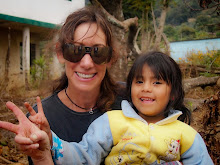
I hope you’ll look at the photos which probably tell this story better than this entry.


hi its me again love looking at the pictures yossi seems to be having a great time miss u very much cant wait to hear your voice again call as soon as u get home love mom
ReplyDeleteGreat photos, Honey and thank God for Yosy's nylon rope! Despite your protestations, this was another great post. I think you're just getting tired and homesick. By the way, what happened to Mark???
ReplyDeleteHi mom and dad...glad you guys are having a good time in Botswana...victoria falls will be a heck of a finale to a truly epic journey, a modern odyssey...has dad found any israelis on the trip? Oh and btw can you grab me a few trillion zimbabwe bucks? I still can't believe that a bushman owns a cell phone...I guess this makes trevett the last anti-technology holdout on the planet...ttyl and may the force be with you....pics are awesome
ReplyDeleteI didn't think Hippos ate humans, would they squash you if you got too close? Great photo's a little too intimate with the lioness even if you were using a telephoto lens, they do eat humans. I can't believe your truck got caught in the sand, what was it quicksand? We are all fine here and I am happy to report the spring is coming even though we still have a little snow leftover. Can't wait to see you, come home safe and all filled up on Africa want to hear all the stories you didn't write about.
ReplyDelete